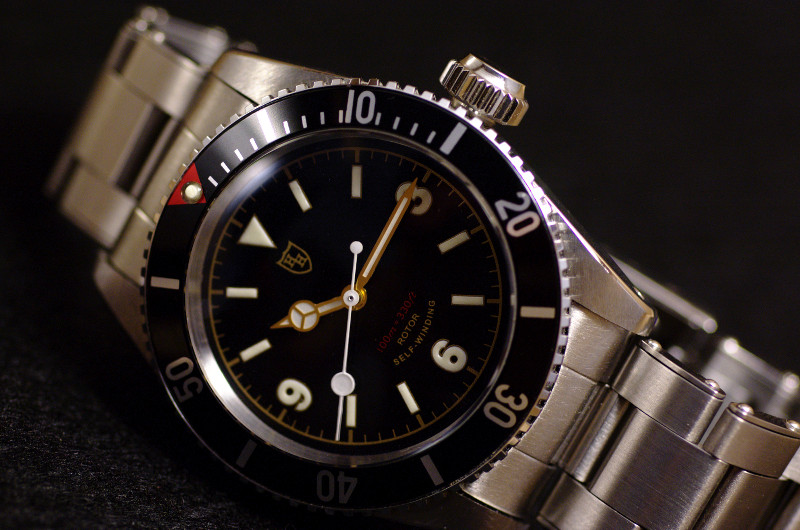
A lot of work in the workshop…
I hope to get this website back on track shortly.



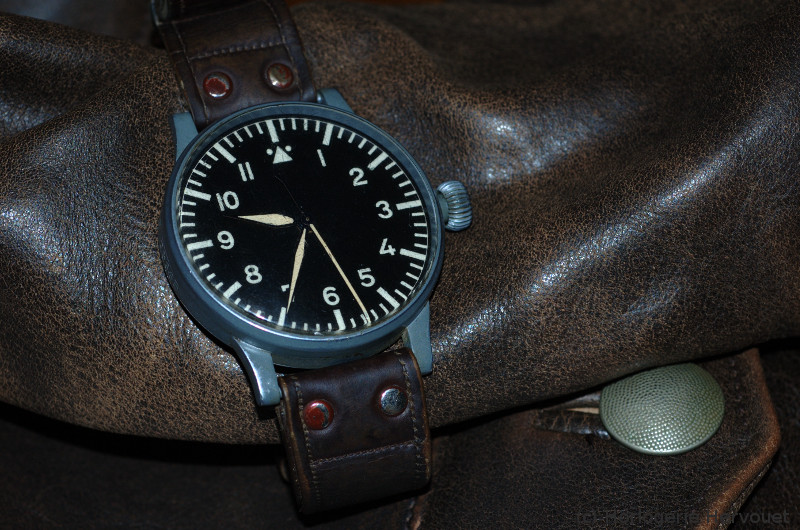
A “B-Uhr” by Stowa
The german Luftwaffe “observation watch” of WWII is a classic. It was more a navigational tool than a watch, and only worn by pilots or navigators over their flying suits. It was also not issued to anybody in particular, but used only when needed and returned after each flight. Wartime Germany having enormous needs, a specification for a navigational watch was emitted and a few suppliers were selected : IWC (swiss), Wempe, Laco, Stowa, Lange&Söhne (german firms, using also swiss ebauches). All those watches were externally mostly similar, with a grey finish, big crowns usable with gloves and a 55mm diameter; not exactly a wristwatch.
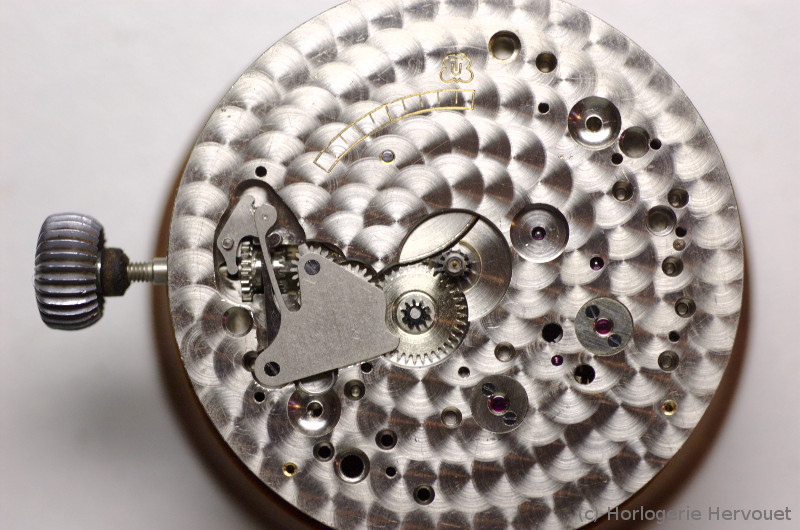
The Unitas movement, under the dial
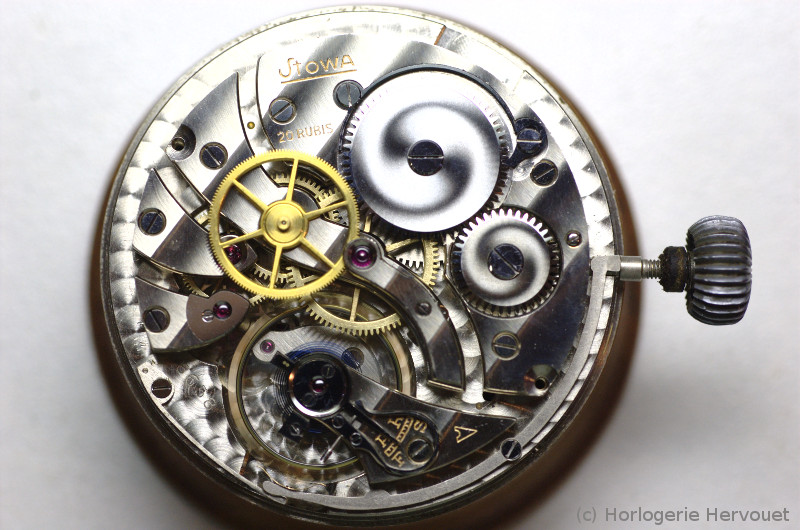
Note the leather gasket on the stem
Walter Storz’s (Stowa) version of the B-Uhr is based on a swiss Unitas ebauche; this movement is very well finished, most notably the jewels are not flat but convex, thus limiting all friction in the geartrain to a minimum. As per the specification, the base movement is modified, an indirect central second, a swan neck regulator and a hacking stop are added. Such add-ons are quite uncommon on a pocket watch movement.
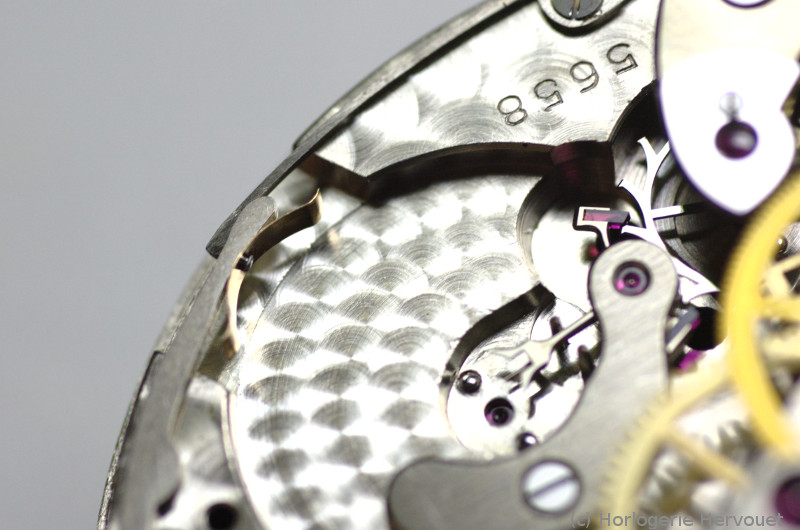
The hacking lever
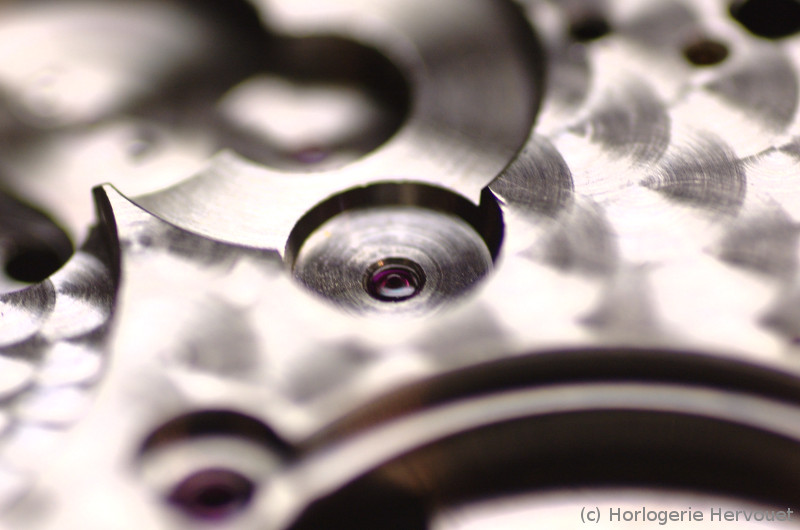
Detail of a jewel
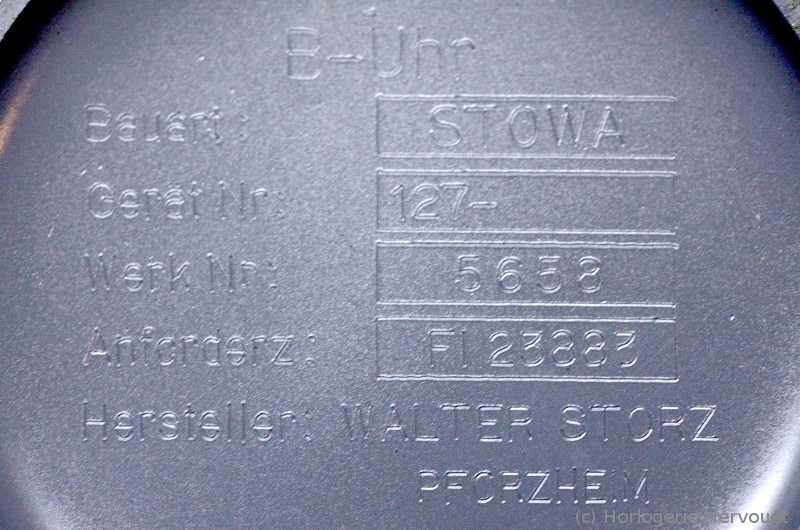
The various markings inside
The dial design remains very popular, and is easily found in a lot of modern watches of all kinds of type, price range, and taste.
A few resources:
a military watch expert, K. Knirim
a current example of an IWC “Flieger”
the Stowa brand is still active

Lemania was a Swiss manufacturer, best known among collectors for its military watches. It made chronographs for the british RAF, for the swedish army, … Lemania also build ebauches for other manufacturers: the famous Omega Speedmaster “Moonwatch” used a Lemania-based movement. The Lemania 5100 was fitted into quite a few military and civilian watches, for example the Bundeswehr issued some to helicopter crews.

A Lemania “Majetek Vojenske Spravy”, a Swiss watch specially made for the Czech army (1950s)
“Majetek Vojenske Spravy” stands for “property of the military administration”: it is cleanly written all over the caseback, with a unique number, usually 3 or 4 digits. This watch was never sold to the general public, there are no markings on the dial so collectors call it the “Lemania Majetek”.

Caseback markings
During the prewar period, the Cezch administration used Longines watches, non shockproofed with a small second, their design was already old. After the war, Lemania, Eterna and even some Soviet watches (Strela 3017, Pobeda) can be found, bearing the “Majetek…” and number engravings. Contrary to the Lemania, the Eterna model was available in the civilian market. The Lemania is powered with the 3050 caliber, a well made sweep second handwound movement with indirect drive. Two details set it apart from an ordinary movement to my eyes : there is a small jewel in the sweep second friction spring, and the crown wheel is nicely made in the old fashioned way:
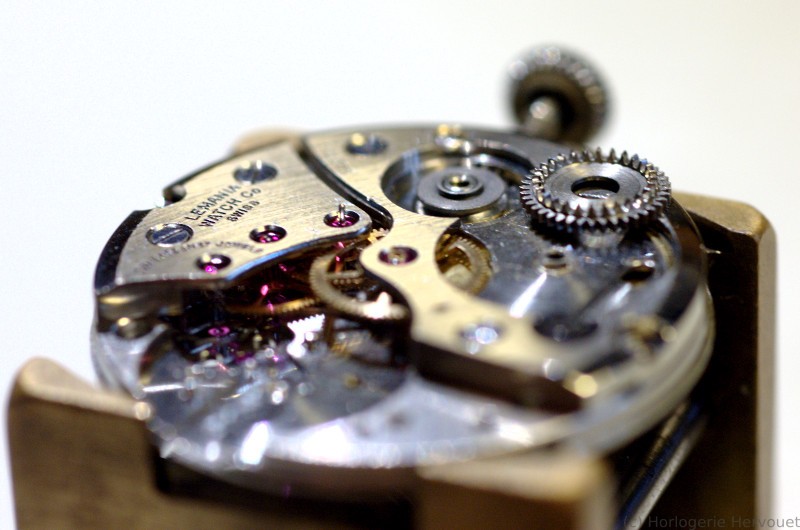
The crown wheel
The case has an uncommon shape and size for a 1950s watch: thin (9mm) but big (38mm across without the crown) for yesterdays standards, the angular shape sets this watch immediately apart.
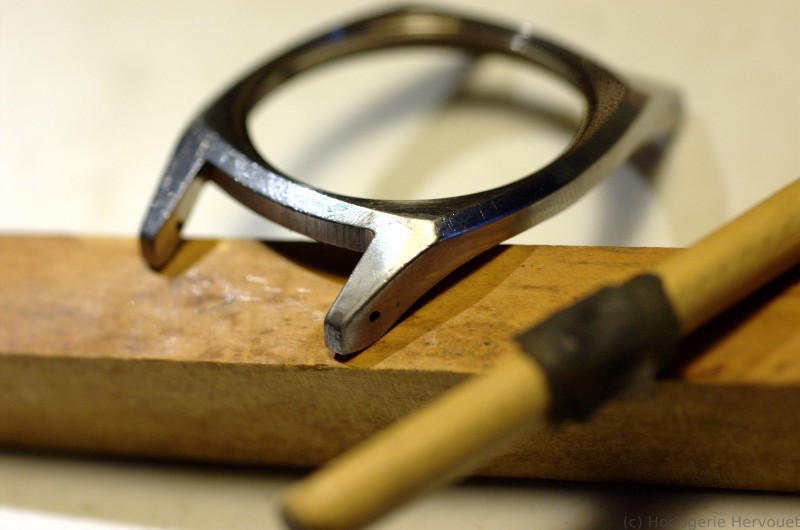
Polishing the case, by hand to keep the angles sharp
Vintage styling is very “in” these days, so Eterna made a reissue of the 1950s model: it had a similar shape to the Lemania. The reissue has of course a modern automatic movement with date:

The Eterna reissue

We are used to pocket watches, we see from time to time pocket and wristwatches movements mounted in desk watches. But a wristwatch movement in a pocket watch, also usable as a desk watch, this is new.
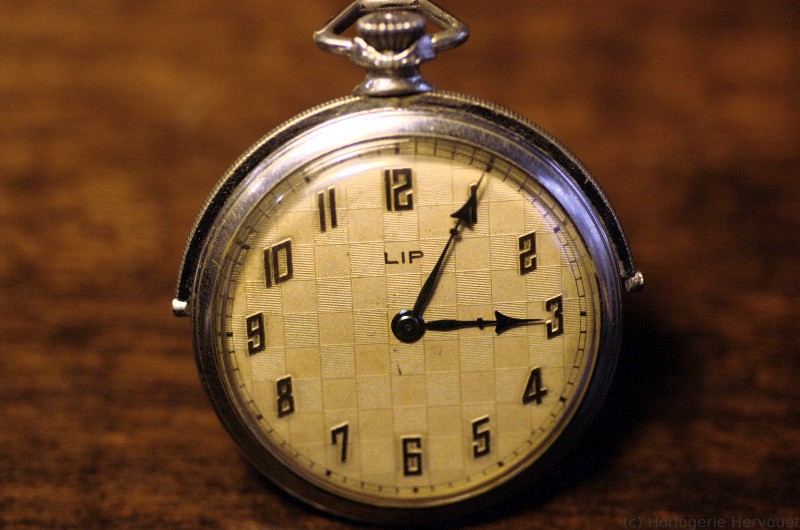
A french Lip from the 1920s
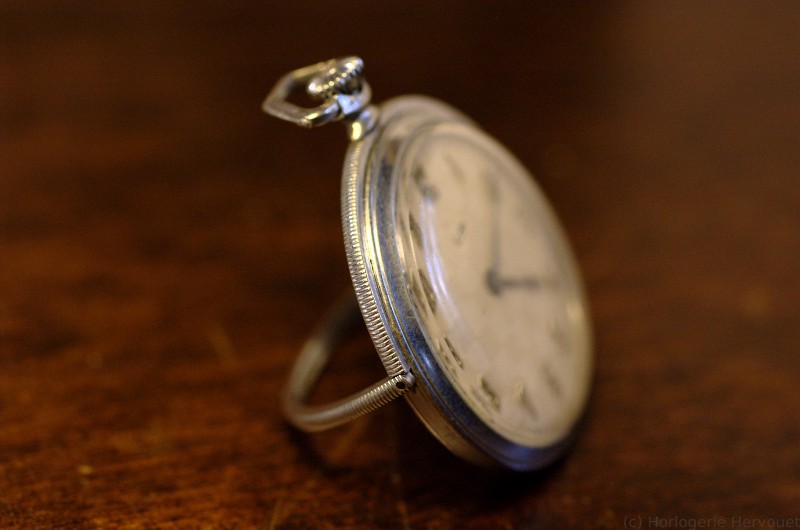
A clever way to convert a pocket watch into a desk watch
This thin dress watch contains a Lip 26.3 movement (I think : there are no markings inside, but it could be identified by the shape of the setting lever). Some “watchmaker” glued a minute hand of the wrong shape, I was very lucky to find a fitting replacement.

A Lip 26.3 (probably)
The styling of the dial and blued steel hands is typical of the 1920s. Here it is with a 18″ Eterna, a factory-converted pocket watch movement without stem. Both are build without seconds hand, like small desk clocks.
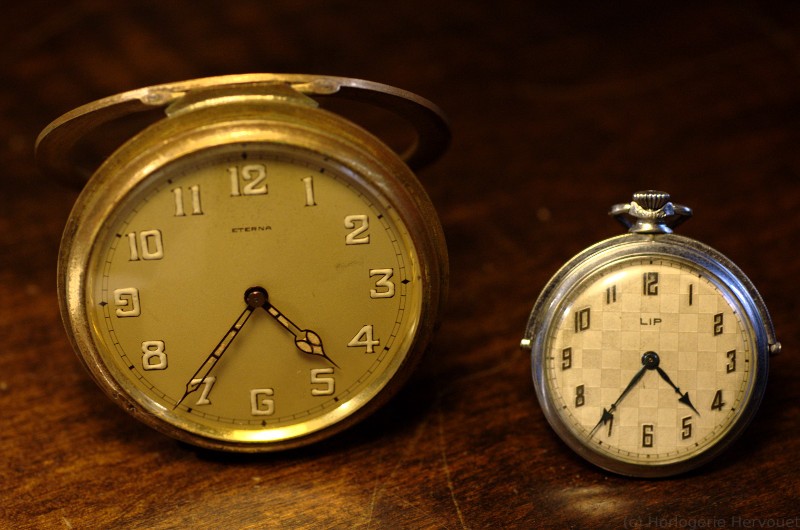
Two deskwatches from the early 20th century

In Soviet Russia a wide range of movements were produced over the years. The first soviet attempts were based on existing designs, bought and locally produced. But contrary to a popular belief, they did not only copy western technology or produce only low-grade movements, they also developed original designs.
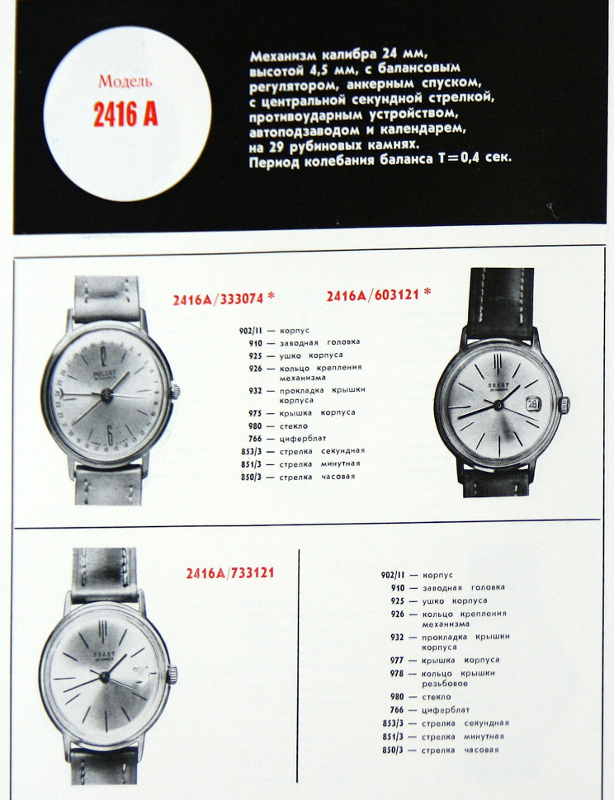
A page from a 1960s Soviet watch catalog
The 1MChZ (the 1st Moscow Watch Factory, later named Poljot) 2416, a slim (3,9mm) automatic with pointer date and central second appeared in 1963, one year after the much more common variant with a conventional date window. To build such a thin movement while keeping a traditional rotor the designers found some unusual solutions:
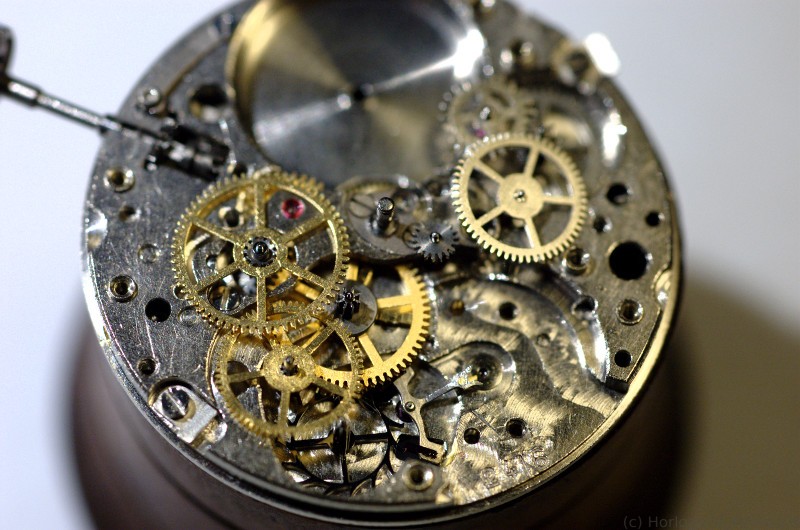
Rotor post (center), autowind gear train (top right), timing gear train (bottom left)
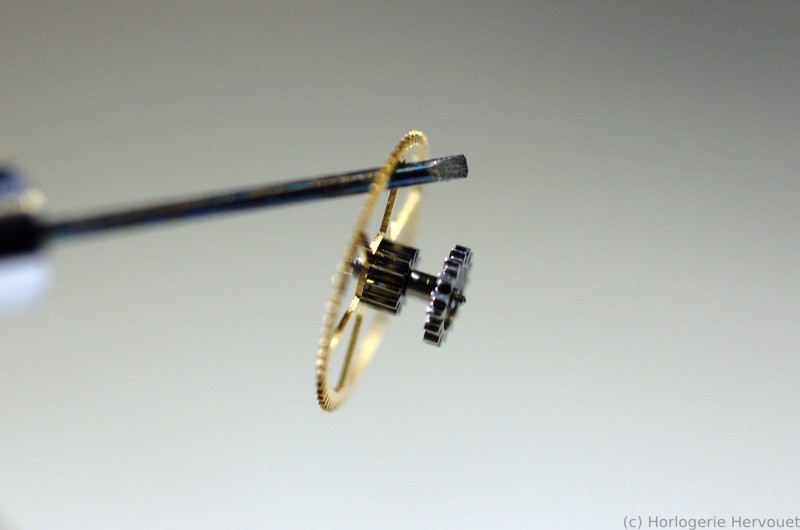
The offset cannon pinion
The coupling between mainspring, autowind gears and handwind gears is also nicely done, allowing the watch to be winded by hand: a two-stage ratchet wheel is mounted atop the mainspring barrel.
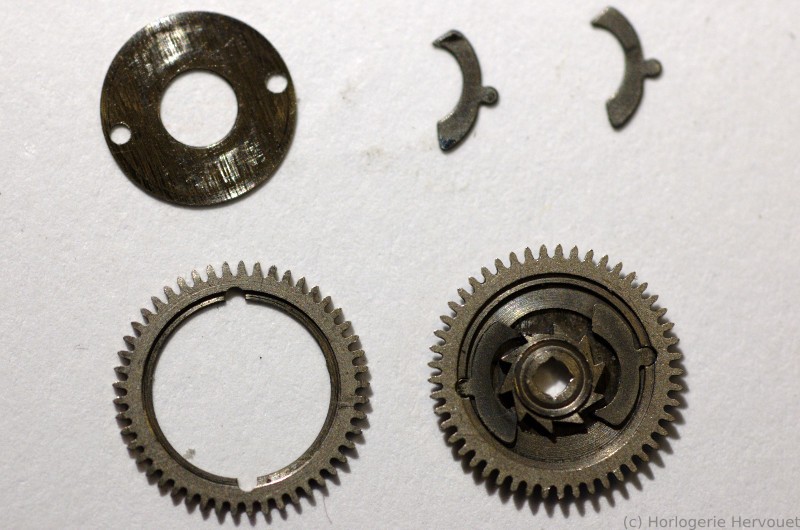
The ratchet wheel, and what hides inside
The thinness of the movement allowed it to be found in the slim dresswatches of the era, mostly in the Poljot “De Luxe”. The “Kocmoc” (cosmos) model is probably the only pointer date watch of the Soviet production. It is often found in gold plated cases but this one is made from stainless steel (probably a case replacement). Such cases were mostly made for the export market, however the case back bears a cyrillic dedication from 1972.
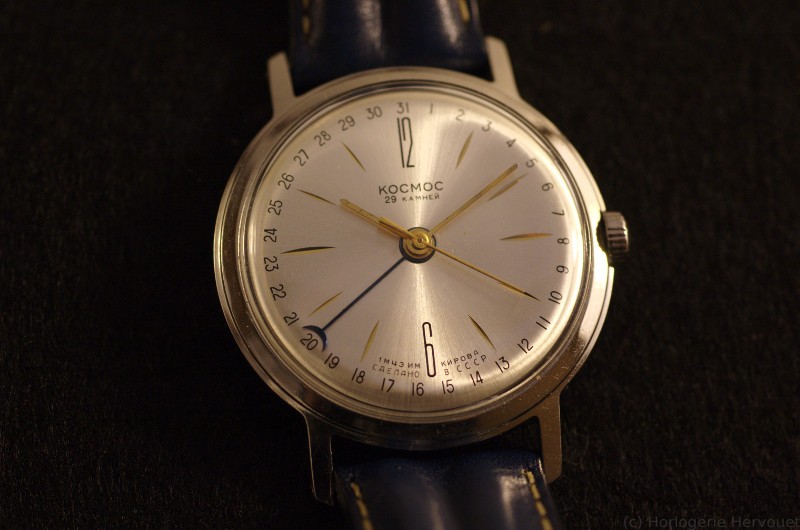
A Cosmos from the 1st Moscow Watch Factory, with a restored dial
The production of the 2416 family ended in the beginning of the 1970s, after only one decade.
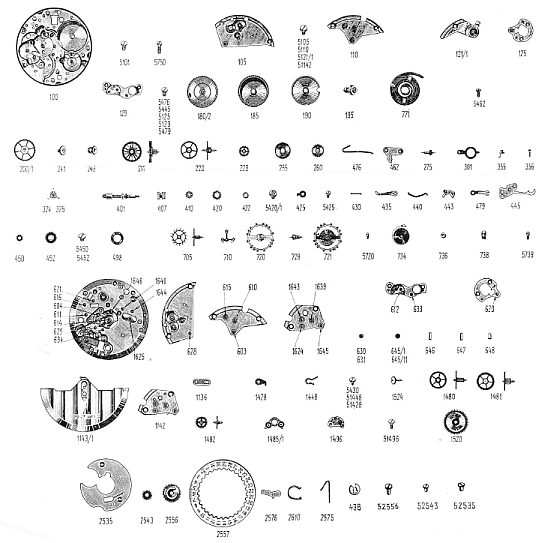
Parts list for the Poljot 2416 (same caliber but with date window)

The lathe is an essential tool in any serious watchmaker arsenal. It is (and always was) quite costly, see for example this online US-based supplier : http://www.ofrei.com/page_205.html. Fortunately, there has been few improvements on the typical watchmaker lathe since the late 19th century, and a lot of used lathes are still in operation.
One well known (at least in Europe) lathe and tool maker is the Lorch company in Germany. Active between 1885 and 1976, Lorch produced a wide range of lathes, small tooling and accessories for watch and clock making, and more generally for any precision work. They used various commercial names, such as “Lorch”, “F. Lorch”, “Lorch, Schmidt & Co”, “L, S & Co”.
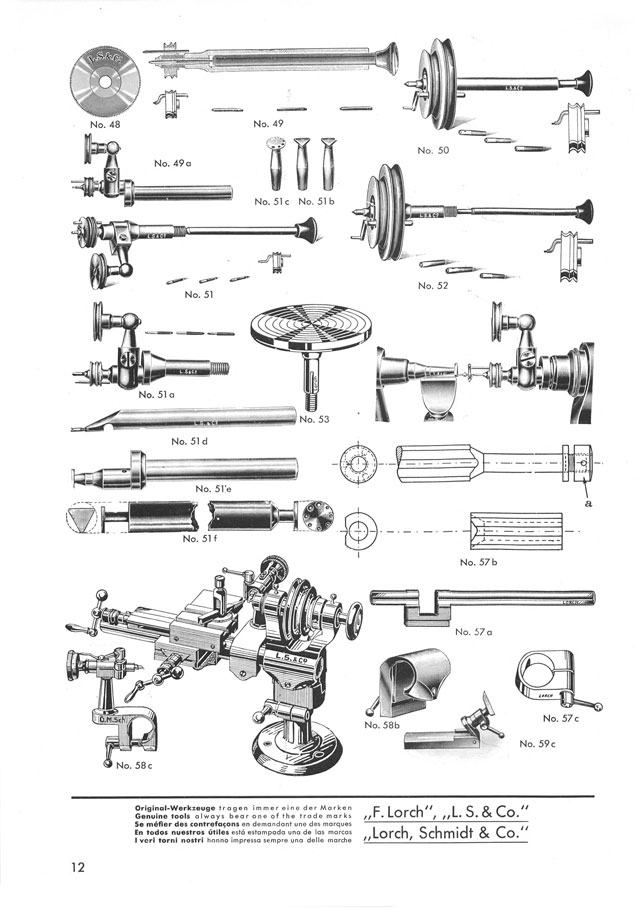
A page from a Lorch brochure
The pride and joy of the workshop is a 8mm Lorch, “left handed” (they seem to be easier to find, it does not change anything much except the cross-slide operation), with two ball bearings on the headstock. Probably made before the second World War, it came in a beautiful wooden box loaded with accessories:

Some of the accessories contained in the box
The typical headstock has one ball bearing only, this headstock is much less common and according to the tool maker, should be even longer lasting.
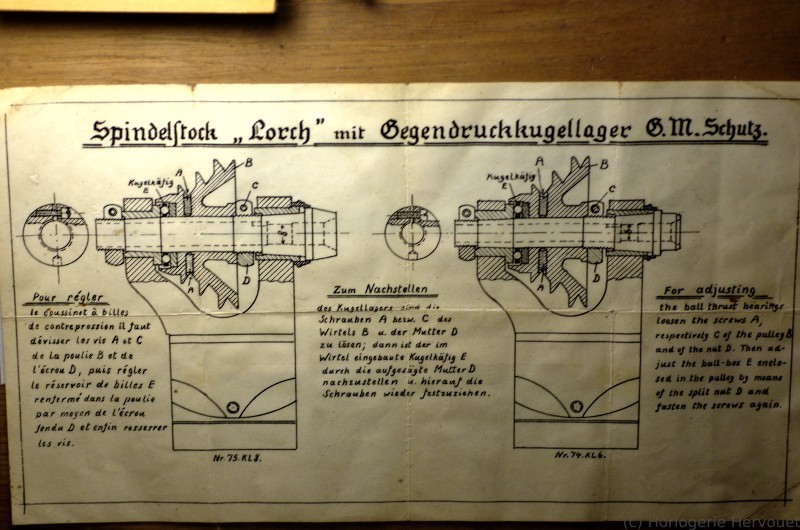
The schematics of the headstock
Watchmaker lathes are not only tools for professionals nowadays: collectors are also interested, there are some nice resources on the Internet:
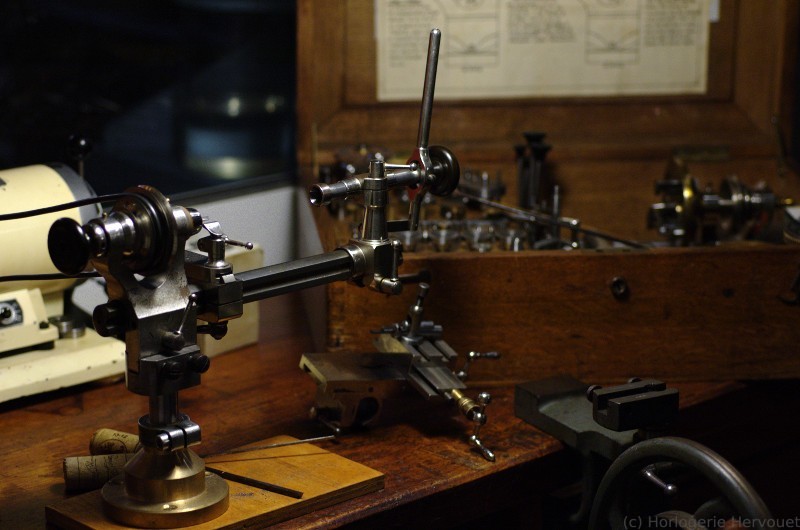
On the workbench, with the motor and handwheel

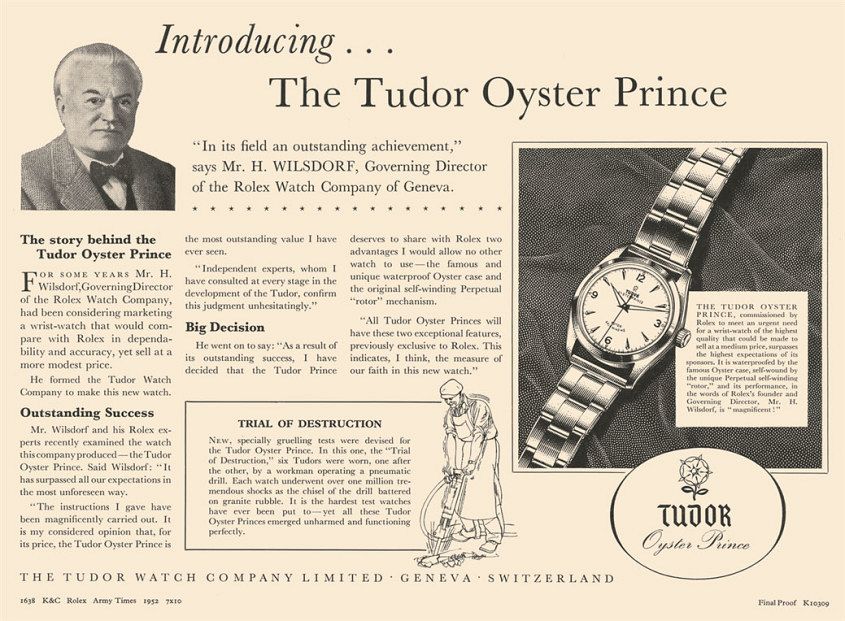
Vintage ad for the Oyster Prince line
Tudor was intended as an entry-level brand for the less democratic Rolex. “Montres Tudor SA has designed, manufactured and marketed Tudor watches since 6 March 1946. Rolex founder Hans Wildorf conceived of the Tudor Watch Company to create a product for authorized Rolex dealers to sell that offered the reliability and dependability of a Rolex, but at a lower price.” says their website. So, beginning in the 1950s, they outsourced their movements to ETA, a big producer of various movements and ebauches, and put them in Rolex “Oyster” cases, with Rolex-signed bracelets.
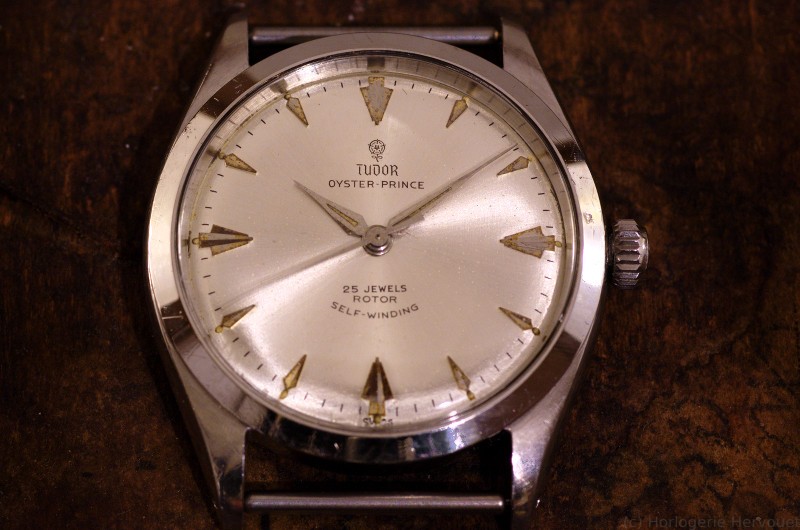
The dial boasts the main feature, the automatic winding
Watches are carefully branded and marketed, and words do count. Successful brands like Rolex and Omega did put some thought into their keywords and most importantly, they stuck to them for decades until they became part of the modern world, like the Levi’s jeans and the Coke soda. What are the main concepts in the Rolex/Tudor language?
Of course, one can play with words and name “Oyster Royal” a Rolex watch and “Oyster-Prince” a Tudor one…
Why 7965? This is the reference number of the case, often engraved between the lugs; Rolex SA made quite a few of them over the years, it must be known to clearly identify the watch.
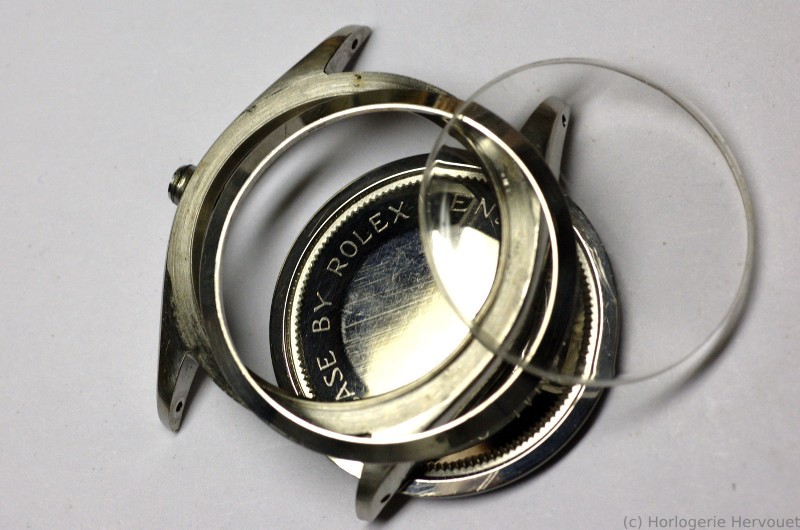
Bezel, glass, midcase and back disassembled before cleaning
Tudor watches from the 1950s and 1960s clearly state the provenance of their Oyster cases: the Rolex logo is on both the caseback and the crown. The production date is stamped inside the case (IV 59 here).
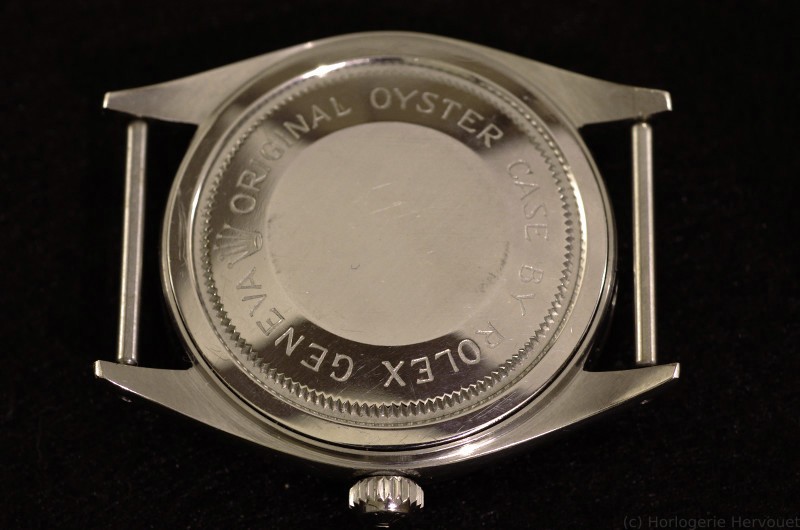
The caseback proudly displays its heritage
Inside, the ETA movement is nicely plated and decorated. In this particular watch this is an ETA 2461, a real workhorse, tough and accurate when well regulated. It may have been replaced: the originals have a balance wheel with screws and are often plated white, this one has a more modern annular balance and is nicely gold/orange plated.
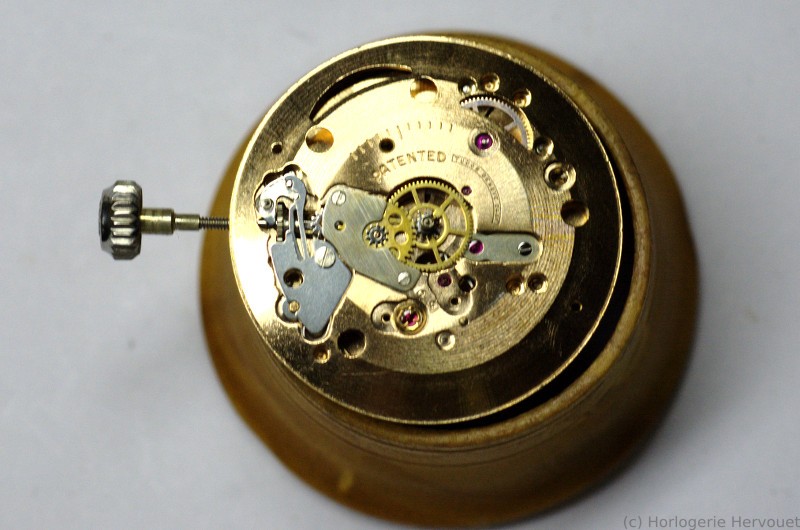
Dial side of the ETA 2461
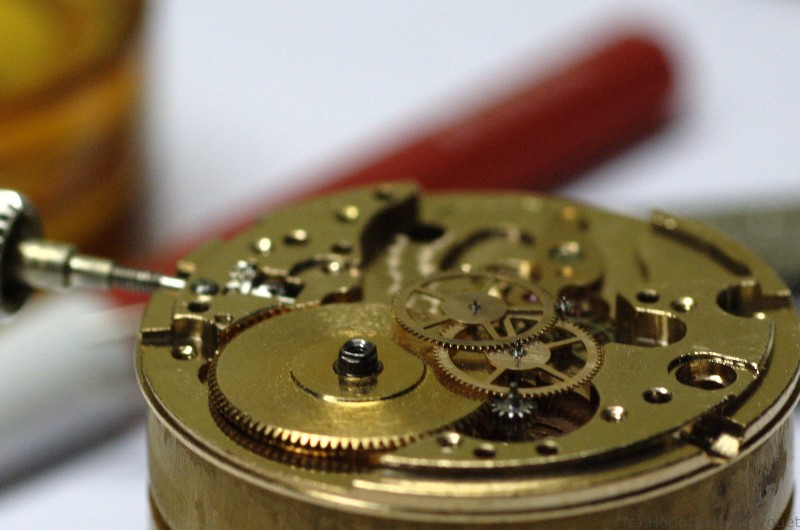
A forerunner of the now ubiquitous ETA2824-2

The rotor has the special gothic Tudor Auto-Prince markings

A typical watch of the 80s, an all steel diver with screwdown crown. Its movement is a caliber made by France Ebauches at the beginning of the 1980s. Seldom seen anymore, because of a short production life, it has an interesting specification, the high torque of its motor. It will work even if there is a little dirt of dried grease inside. The downside is the battery consumption. A modern quartz will eat up less batteries, but will need a lot more servicing in the long run.

Blue plated baseplate…
Made at the same time as the FE 4611, there are some common parts under the dial:
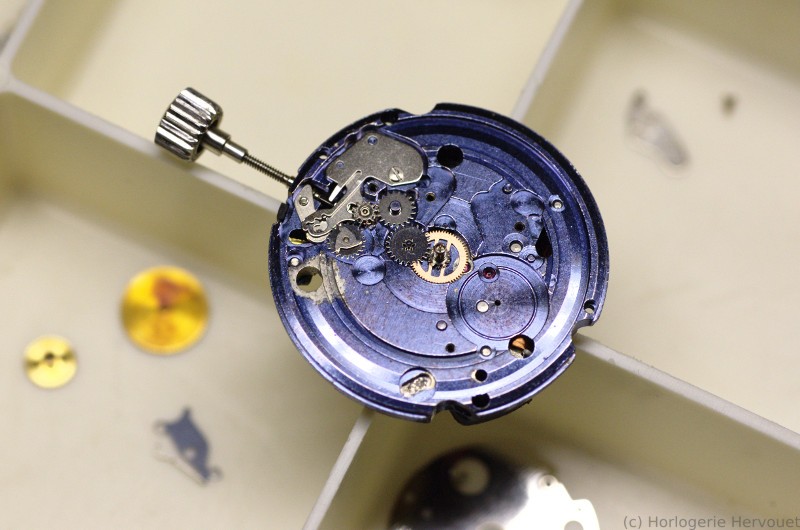
Under the dial
This one was made in August 1981 (see the date stamp on the plastic hood). It needed a full service (complete disassembly, cleaning, lubrication) to work according to specifications, the wheel train was running completely dry. It was never opened before, the red seal had to be broken for the occasion. 34 years without service, not too bad.
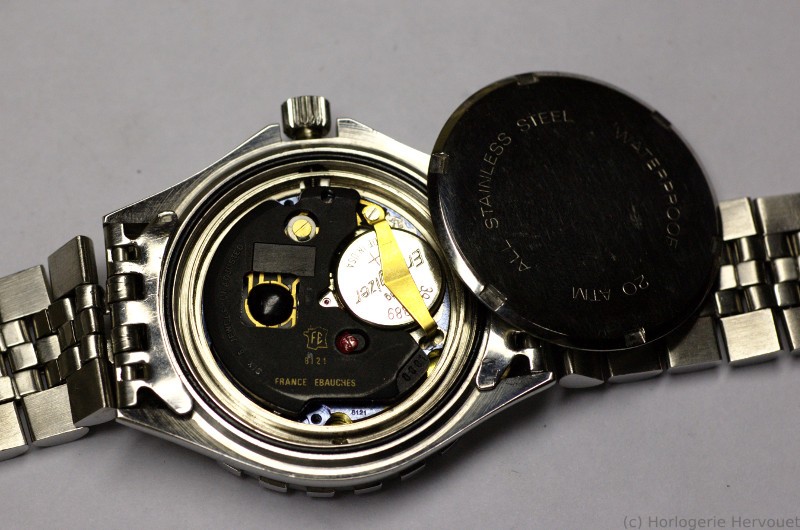
In the case… note the red seal (now broken)
In conclusion, this is an interesting watch with a nice movement, uncommon, very tough, the same was mounted on the well sought-after Yema Superman; it also does offer a pleasing alternative to the ubiquitous Rolex design:
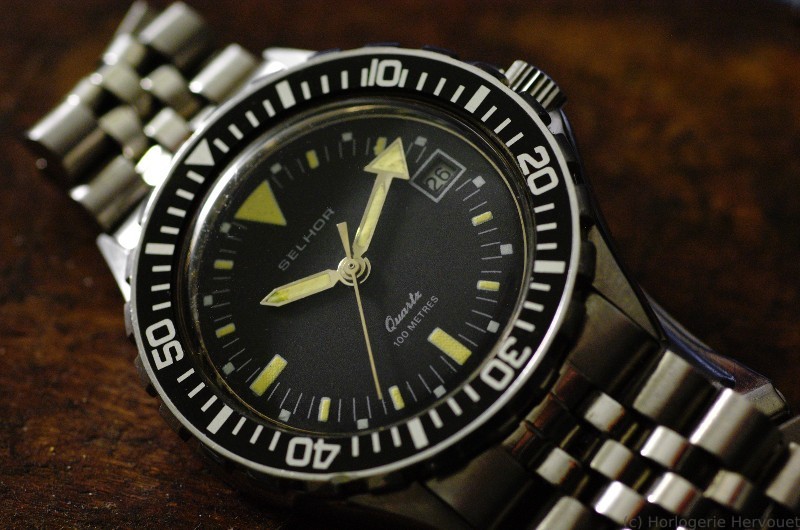
FE 8121 quartz
Selhor was a small french brand, active for many years. Nothing was made in-house, they only assembled cases and movements with custom dials. An error was made here: the depth rating of the case is 200m, but on the dial it states only 100m!

The “Sturmanskie” (Штурманские, Russian for navigator) was a Soviet Airforce issued watch, never available to the general public. The movement was made in the 1st Moscow Watch Factory, named “Kirov” after the famous prewar soviet Party member, and after the 1960s well knowed as the Poljot (Russian for flight) factory. At first, in the 1950s it was a simple watch with a hacking function. The name was reused in the early 1980s to name an all steel chronograph using the well known caliber Poljot 3133. Many civilian versions were made with different dials, always in plated cases.
In 1987 the last version was introduced. New dial (no telemeter scales), modified case (still all steel), specific blued hands and a movement seldom found in civilian watches, the Poljot 31659, a hacking 3133. Between 1987 and 1991, a few variations of the dial can be seen. Here are three of them:
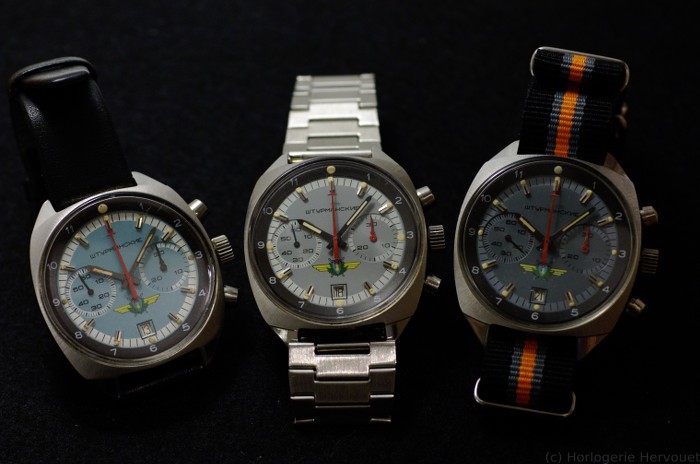
Three Sturmanskie cal. 31659 from the Soviet airforce
The light grey dial is the most common, made from 1987 to 1991. Civilian versions were made using this dial and plated cases. The all grey dial was made only in 1987, the movement having a date stamp. The light blue/turquoise dial is even less common, made around 1989.
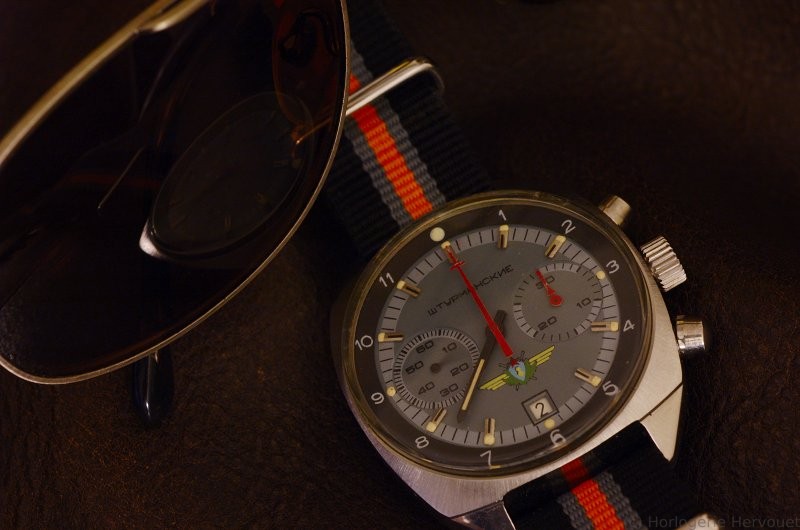
The all-grey 1987 Sturmanskie
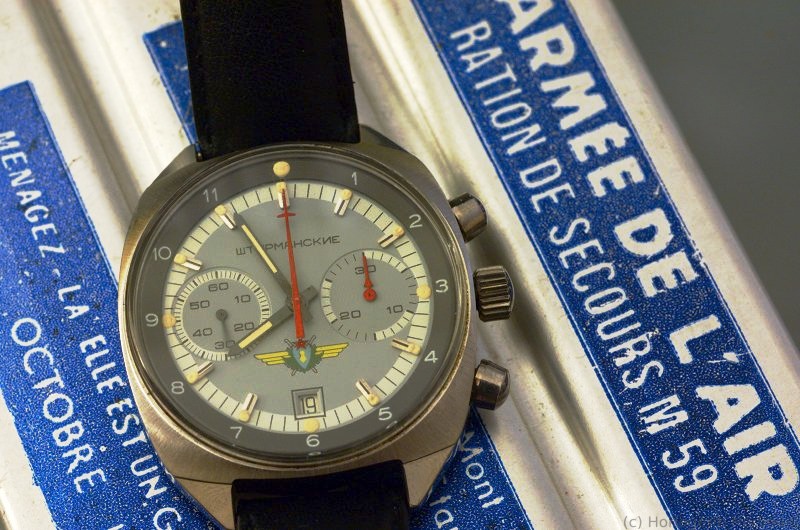
A late model light grey Sturmanskie