Category Archives: repairs

A pocket watch with Lehmann’s patented winding

Jean-Adrien Philippe was granted the Brevet n°1317 in 1845 concerning a keyless winding mechanism, avoiding the need of easily lost keys. He then went on to be the second name behind the Patek-Philippe brand. Other inventors, mostly forgotten, were also active in the 19th century: Charles Lehmann also patented a keyless system in the 1860s, obviously less successful but his system can be found in watches between 1860 and 1890.
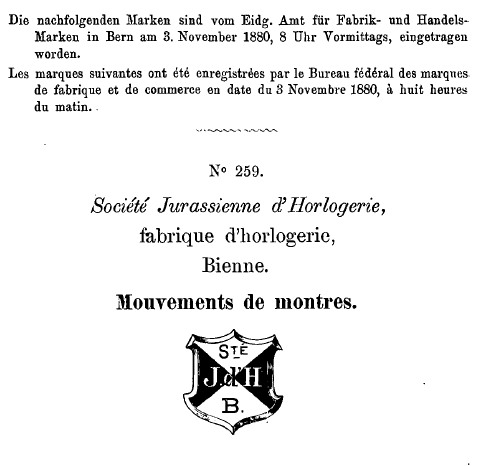
The company of Charles Lehmann

It seems that the Lehmann system was patented in France and in the USA, at least. The US patent has a nice drawing of the complex keyless works. The latest version of the system is quite modern, allowing both winding and time setting with only the crown. Most watches used either a key or a simple keyless system with a pusher to be depressed while setting the time.
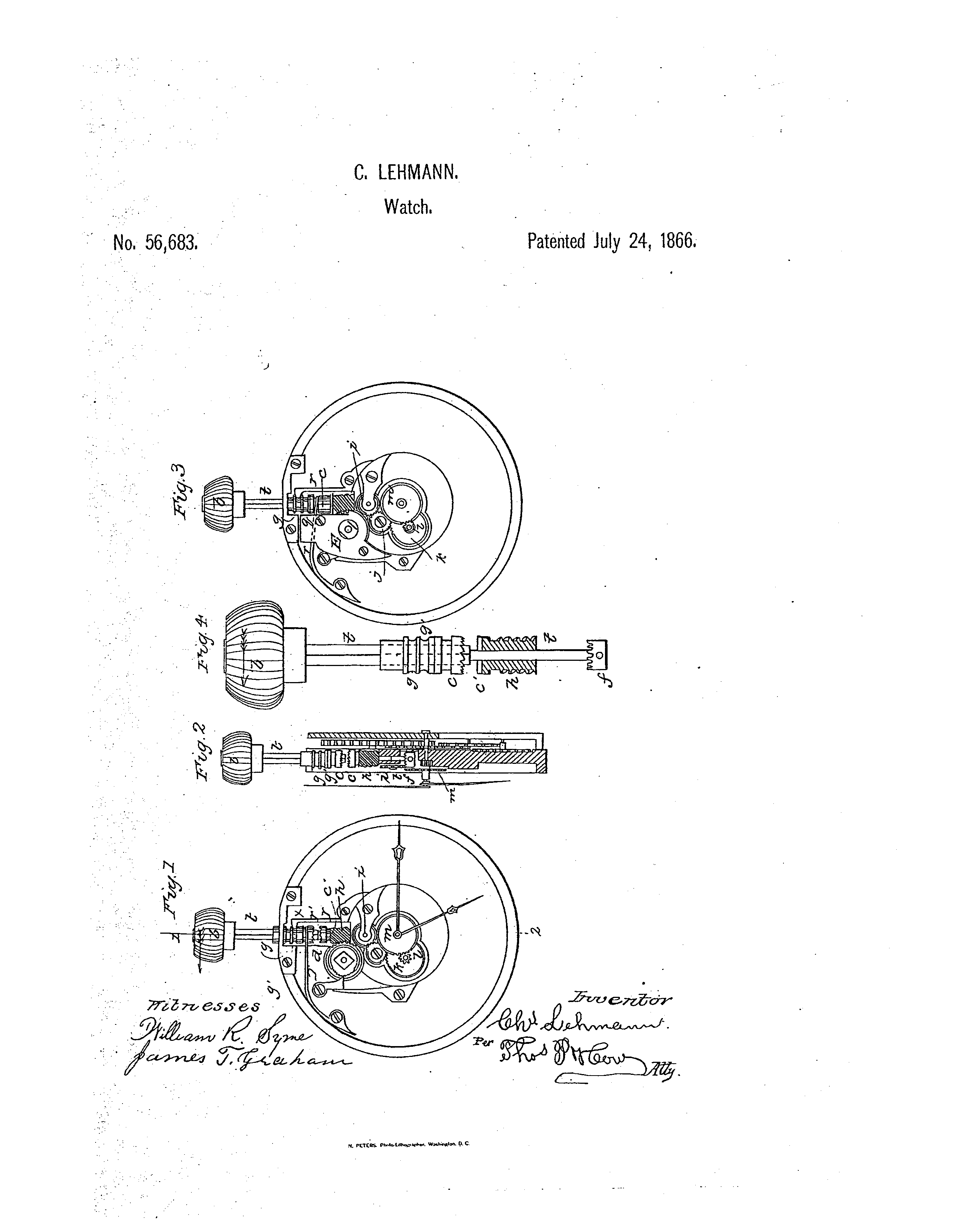
The graphics of Lehmann’s US patent

Most of the system is located behind the dial, and looks quite complex:
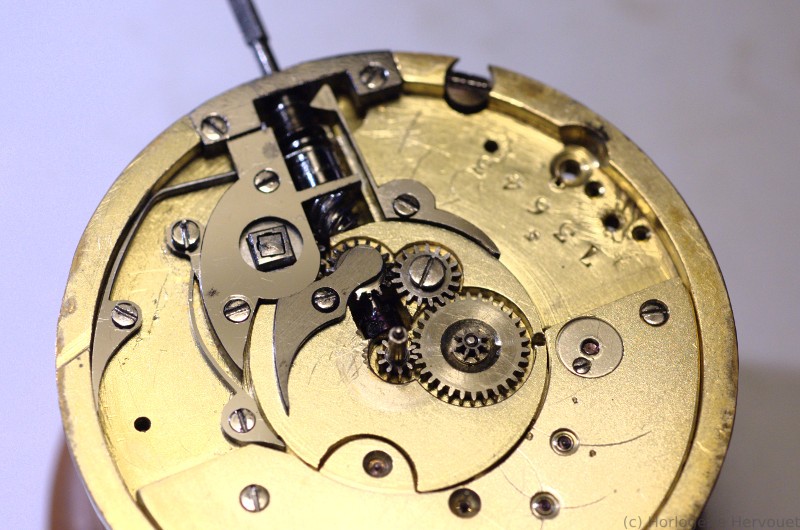
Under the dial

The stem assembly alone is remarkably complex, all those parts must have been very costly to produce.
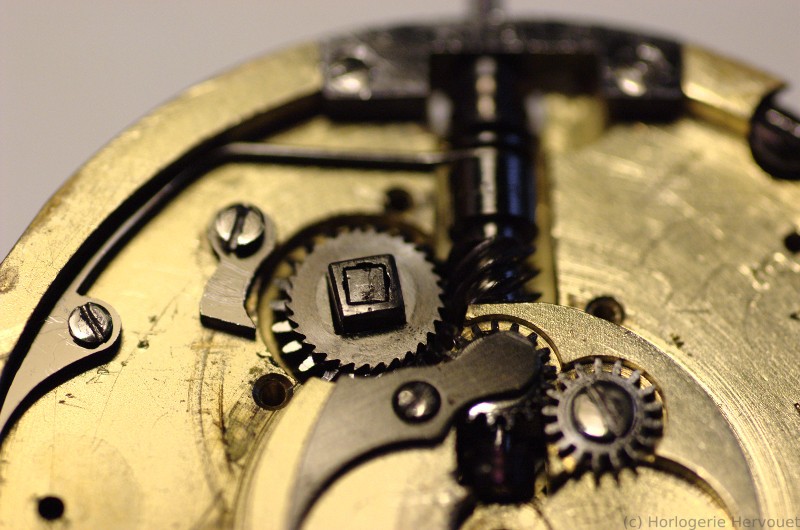
Close-up of the winding and setting mechanism

The main difference with Philippe’s system is the wormwheel.

The wormwheel

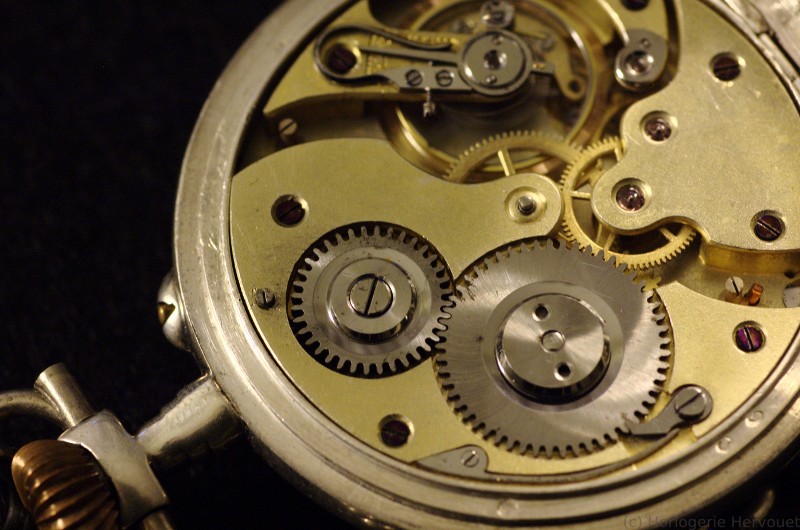
This particular watch had a long life: lots of service marks in the caseback, the engravings on the silver case are almost worn off. Somebody not very talented did some damage: destroyed screws here and there, and the Maltese cross had been violently torn off (it cannot be realistically replaced), the mainspring barrel has to be reshaped. But the most problematic repair is hidden in the keyless works: the small screw fastening the pinion at the end of the stem is loose, the threads have been thoroughly stripped and the hole has been reamed! The pinion being loose, the wear of the gears is important but the system still works…
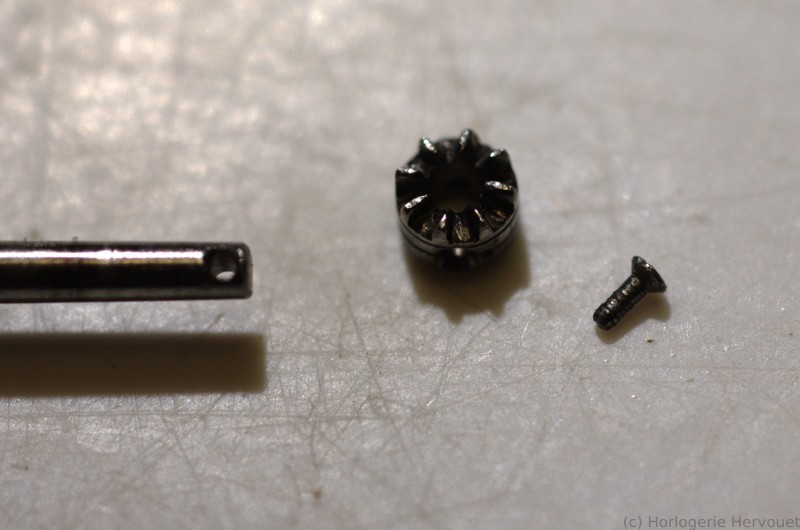
Destroyed threads

The clean way to repair this mess is the following: rethread the stem, and drill the pinion so that a slightly bigger screw can pass trough. Of course, the pinion is in tempered steel, so a blowtorch and some quenching afterwards will be involved.
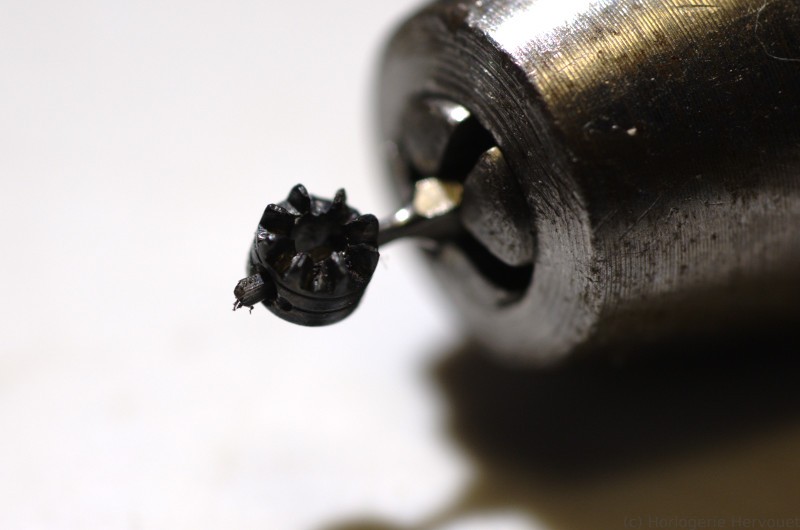
Drilling the pinion

Next, a custom screw is machined:
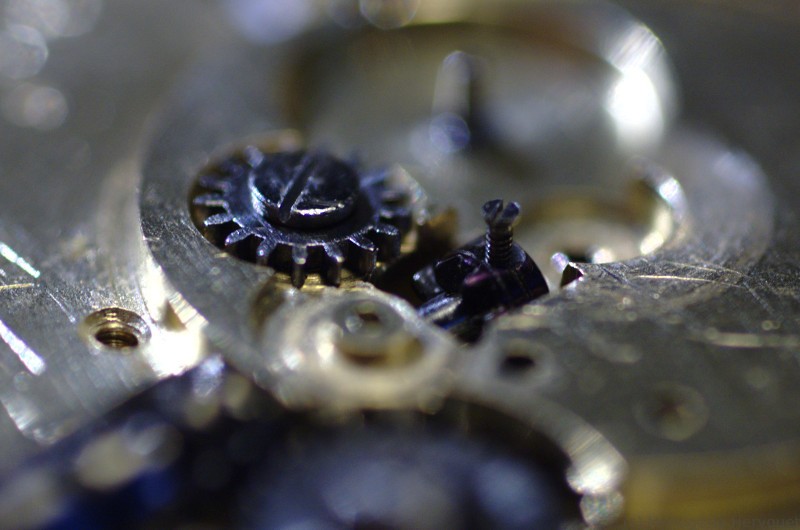
Reassembling with a custom screw

The patent number is proudly engraved in the baseplate:
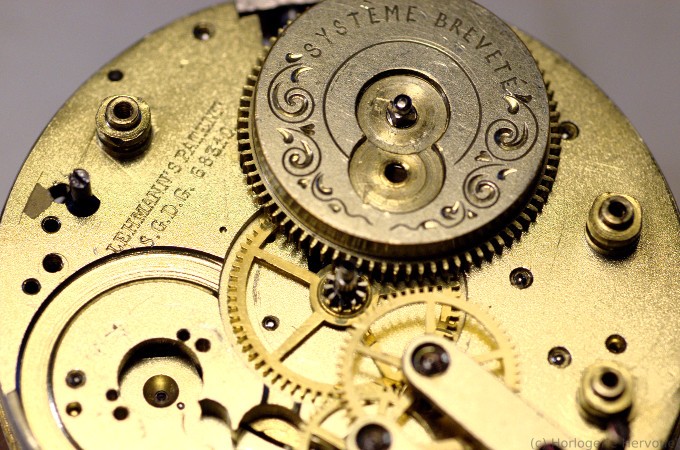
Patent number on the baseplate (the Maltese cross on the barrel was torn off in a previous “repair”)

More than 130 years old, and still ticking!
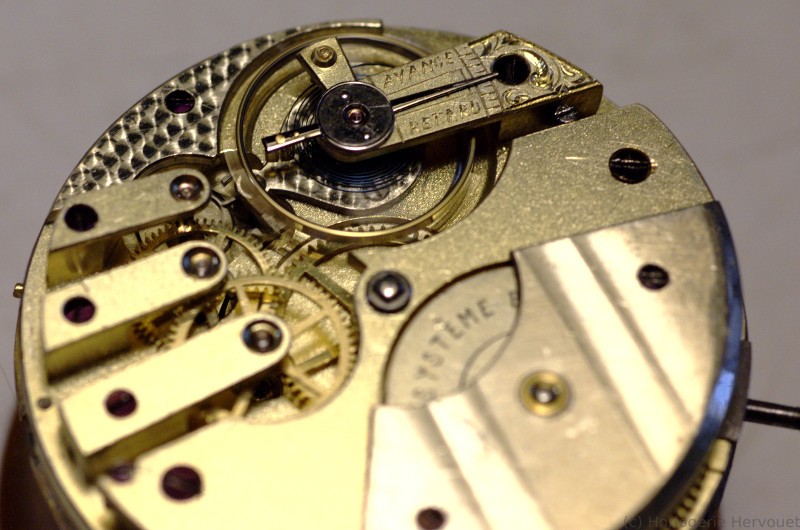
The complete movement

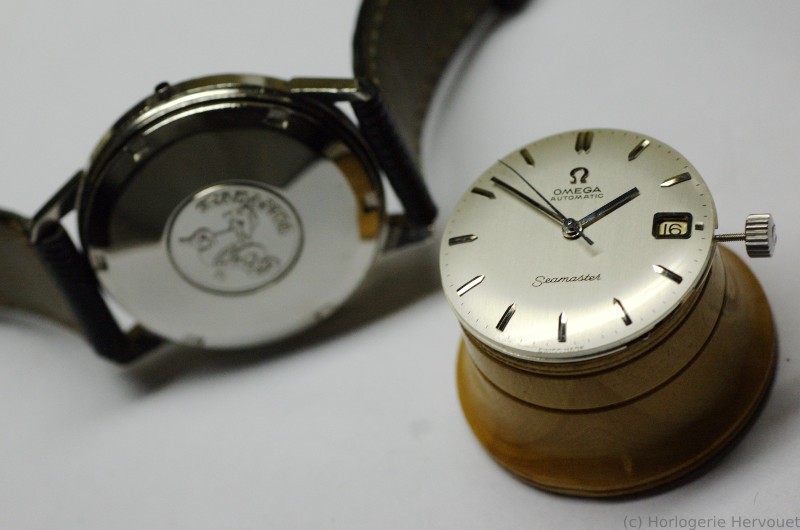
The dial and hands have been replaced at some point, but the silver case is still marked “Lehmann breveté SGDG”.

A classic design, all the originality is hidden inside

Sources:
watch-wiki.org
Watchuseek forum

Share

Rebirth of a pocket watch

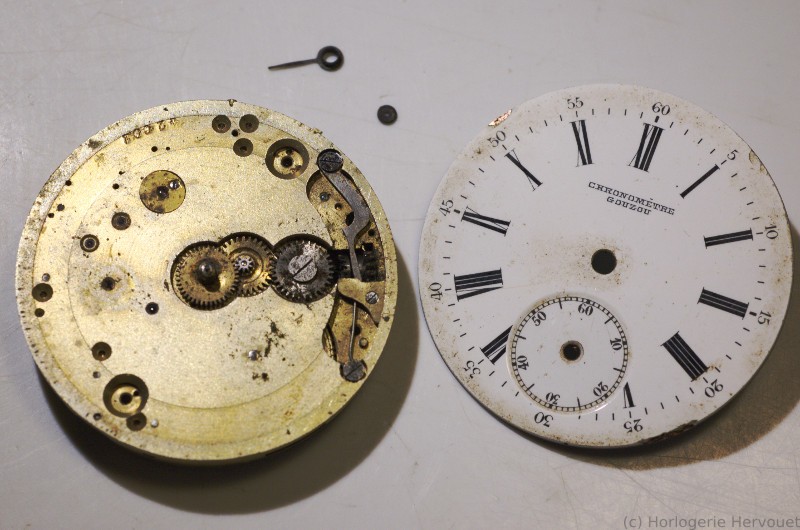
This watch arrived in the workshop in a really rough shape : dirt everywhere, and some missing pieces, among them the hands, the crown, the stem and one of the dial screws. The spiral came loose from the balance bridge. It is an unsigned movement of the beginning of the 20th century, probably French, of good quality. It is fitted with a swan neck regulator and a Breguet overcoil, and it proudly says on the dial “chronomètre Gouzou”, the name being probably the distributor’s.. Quite a few watchmaker’s marks are scribbled in the back, one dates back to 1915.
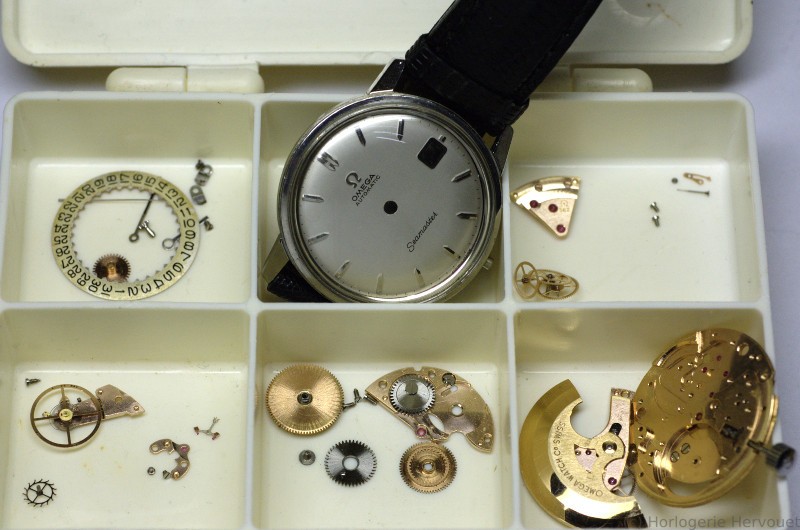
Movement, dial and what was left of the hands…

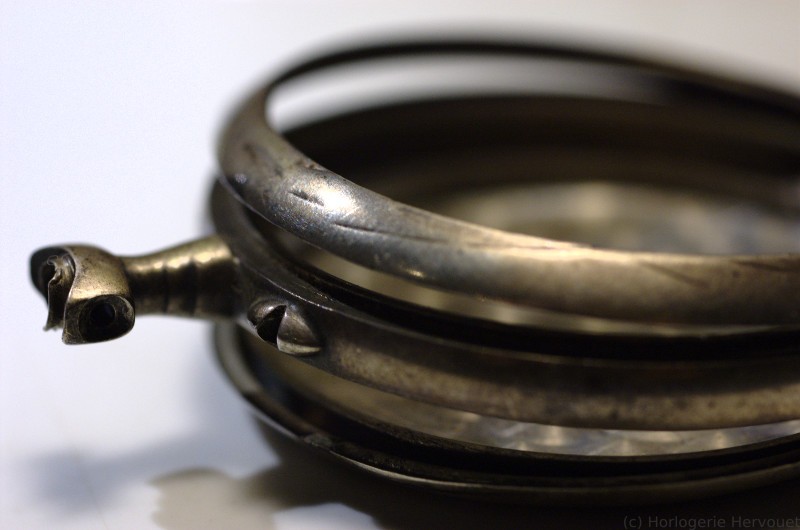
The silver case

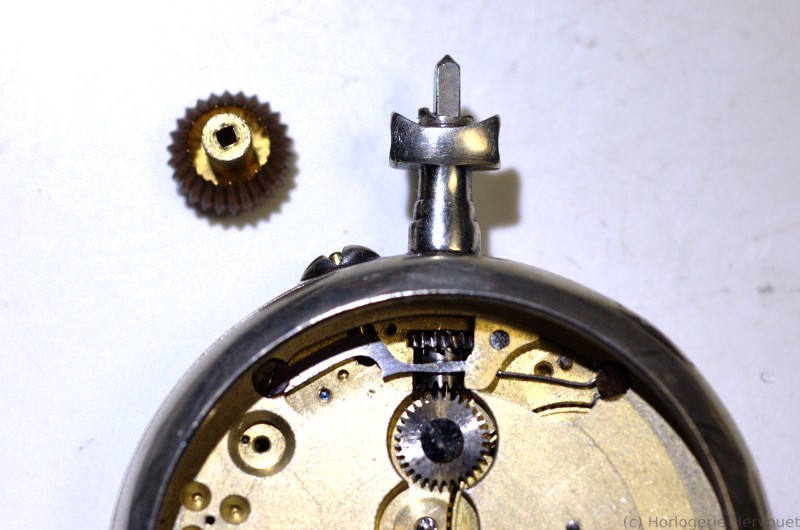
The stem is made from a raw “ébauche”. To be period-correct, the mounting of the crown is done the old-fashioned way, the stem being forced into the crown. The end of the stem is filed down so that when mounted, the crown sits into the case.

The stem must be adjusted to the crown

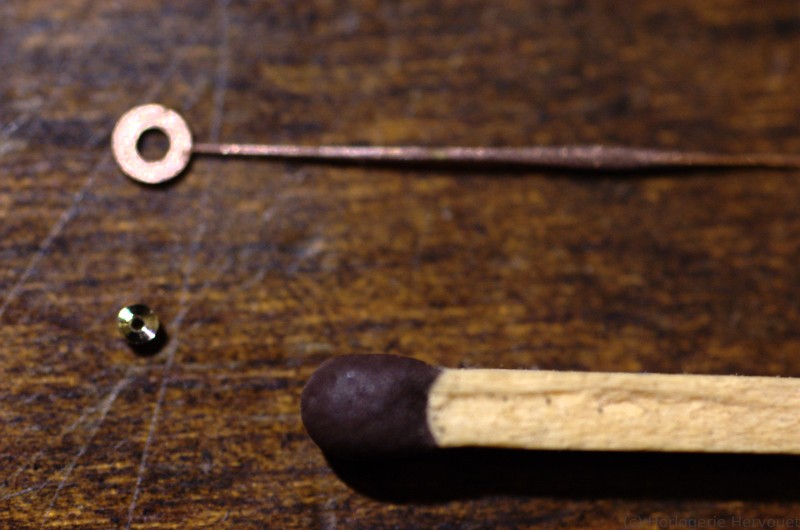
Not much remained of the hands; a pair yellow-plated hard steel is chosen, according to the style of the watch. However, it is extremely difficult to find a matching pair of hands of the correct shape, same colour and material, same style, … and to be able to mount them on a specific watch. The hole diameter of the hands has a very narrow tolerance. A neat solution is to machine small brass bushings, to be fitted to the hands; the bushings are then reamed to the desired diameter.

A hand with its brass bushing, and a match for size

The results, after a thorough cleaning of both the silver case and the movement, and a new crystal. The watch is now quite useable.

The complete watch

The movement cleaned and regulated; note the swan-neck regulator

Share

Rolex 6084

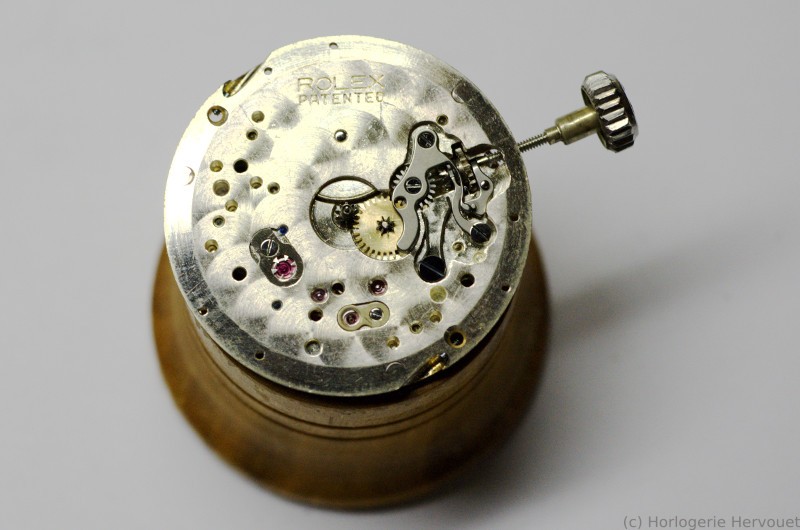
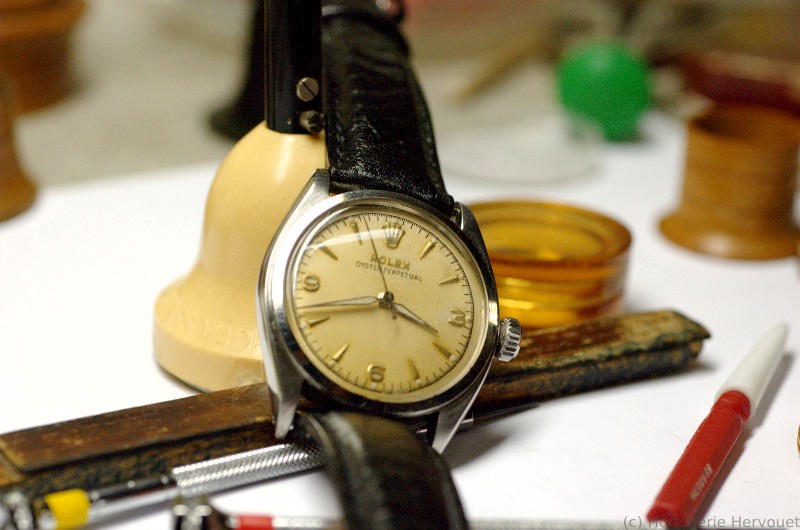
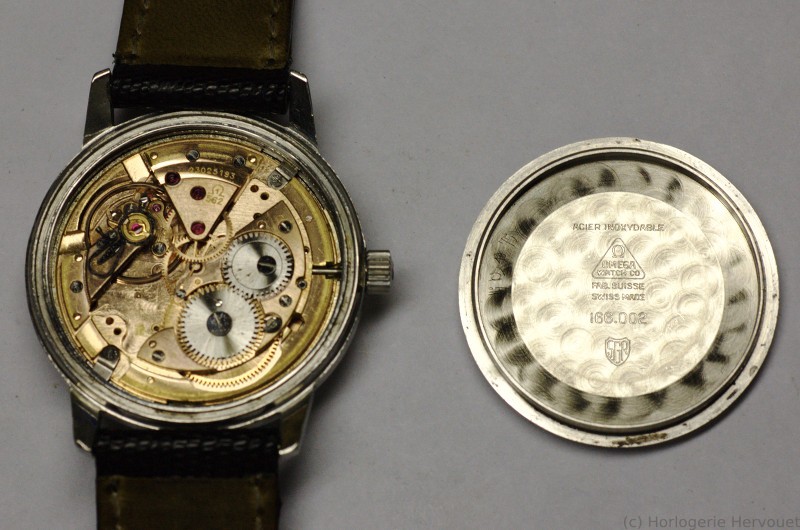
This 1953 Rolex was brought to the workshop as a family heirloom to be serviced. It is a ref. 6084 with the chronometer grade cal. 645 inside, nicknamed “Bubbleback” or “Semi-bubbleback” by the Rolex aficionados (because of the caseback shape). The dial has been refinished at some point, but the paint and varnish are yellowed and look already ancient. It does not have the “Officially Certified Chronometer” marking on the dial, nor the “Super Oyster” crown. But there are marks in the caseback for 6 services, so anything could have happened.

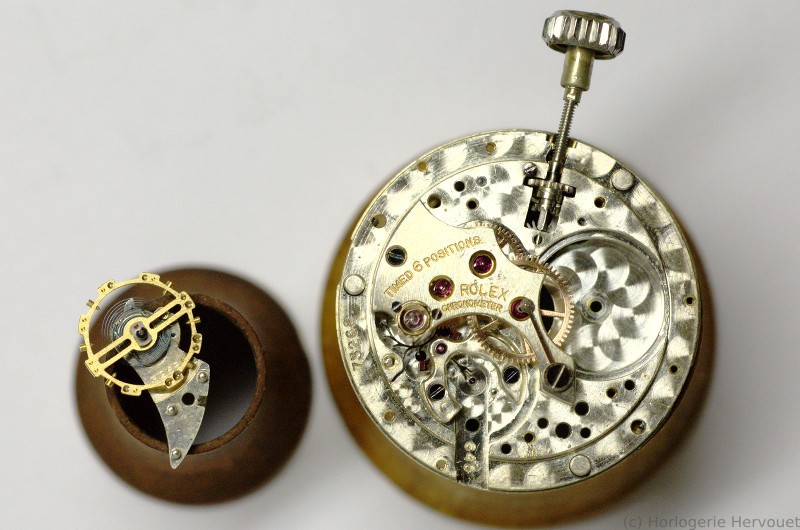
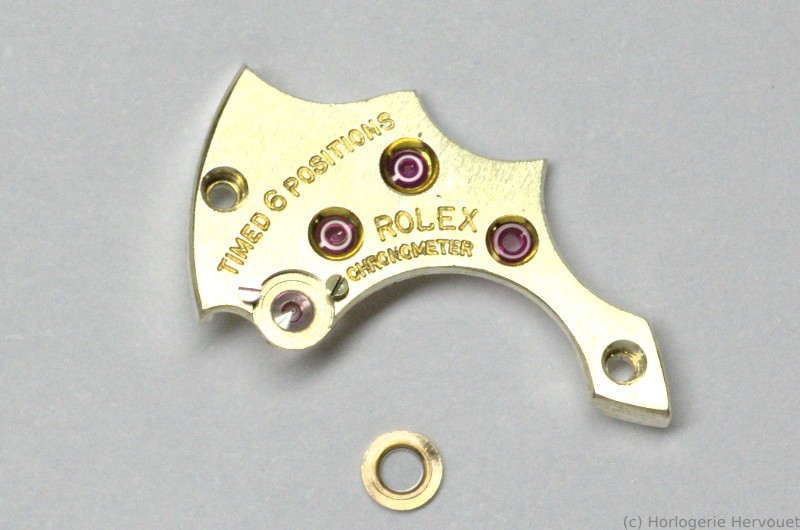
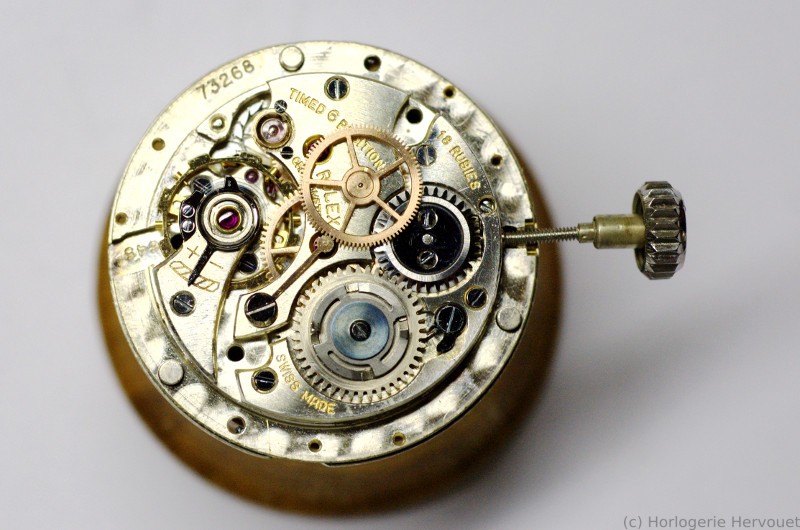
The Rolex cal. 645 is fully decorated; note the specific (and patented) balance

It has been a long time since the last service, as even after the usual cycles in the cleaning machine there was a lot of petrified oil residues in the counter-pivots and chaton of the escape wheel. No wonder the watch stood still. Such chatons are rarely found in modern watches:

On one side of the escape wheel, a removable chaton

The layout of Rolex 645 is common for the 50s, with an indirect second. The friction spring is (as it is usually the case) a bit tricky to get in position.

The Rolex 645, without the automatic winding parts

On the dial side, one can see and admire the setting spring, nicely angled and very frail. Also, the antishock device counter-pivots are different : dial side, inserted in a plate; bridge side, it is removed by gently turning like the Kif device.

Dial side, note the beautifully frail setting spring

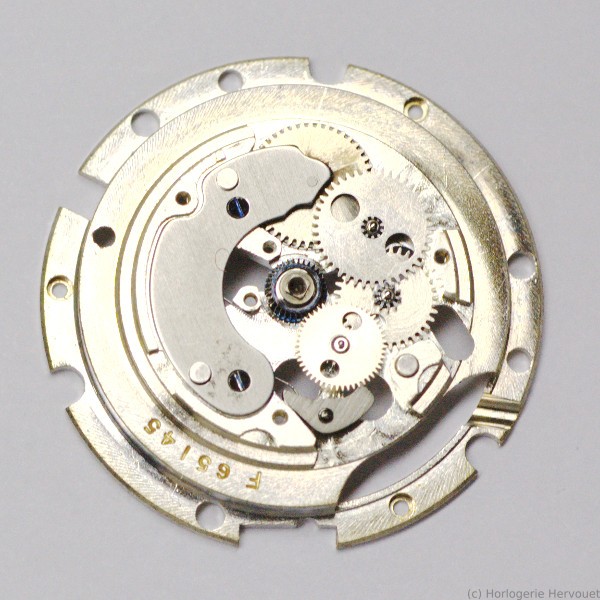
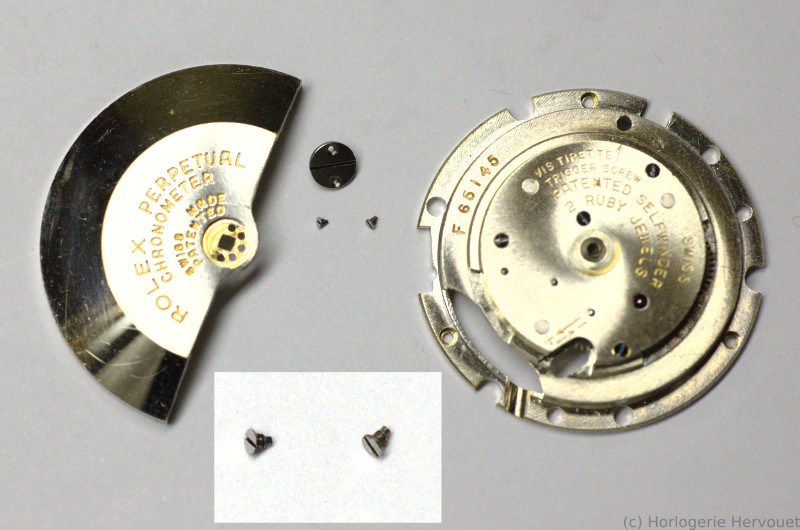
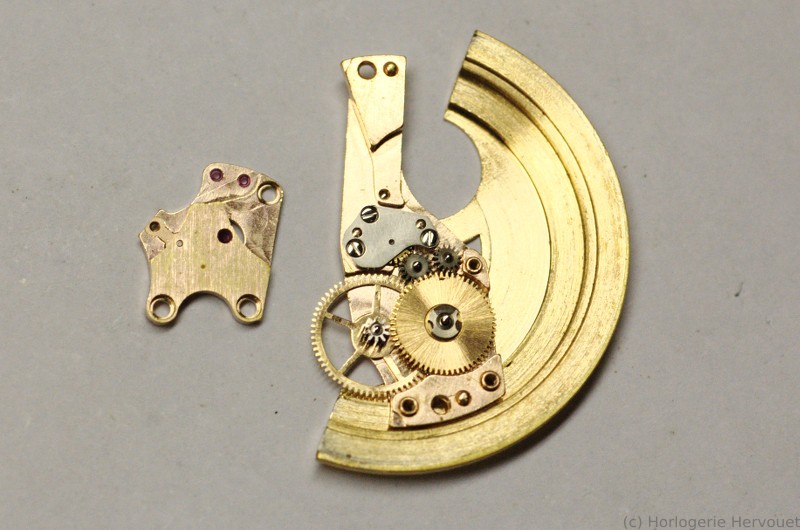
The winding device is unidirectional and use a rotor, allowing the oscillating weight to turn 360°; a modern feature at a time when most other automatic movements used “bumper” devices with partial rotation and less optimal winding. It is modular, the base caliber needs no modification other than adding some coupling parts over the mainspring ratchet wheel. It also have its specific jewel count (2) engraved on the cover.

The inside of the automatic winding module

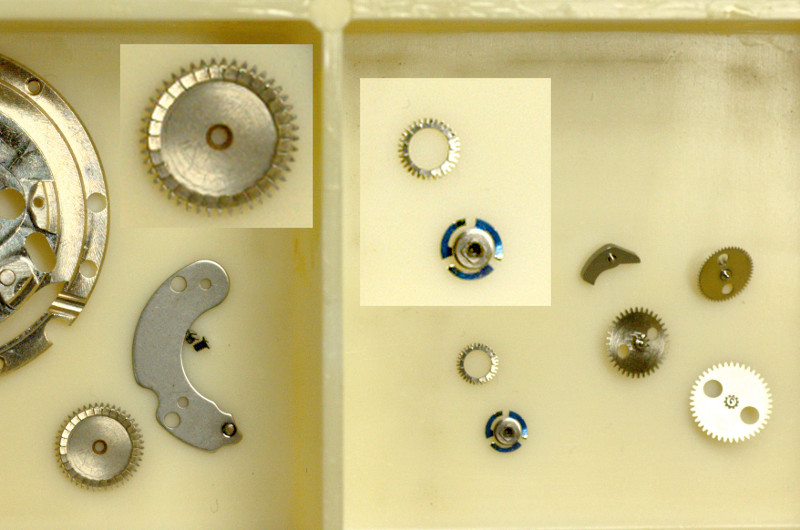
The coupling between the module and the mouvement is interesting: it uses a blue steel star shaped spring and Breguet teeth on both the mainspring ratchet wheel and the last wheel of the module. The coupling between the rotor and the module uses the same principle.

The Breguet teeth (ratcheting) of the coupling wheels

The rotor screw is itself secured by two small screws; the right one, missing, had to be remade

Sitting on the bench

Share

Chronograph cal. 31659

I already made a quick presentation about those soviet military chronographs (click to read). This one was bought in Moscow in 1991 or 1992 by its previous German owner, who wore it and stored it away when it stopped ticking. When it arrived on my desk, it looked good but was completely frozen. The movement is quite tough, it does have a shock protection device so what did go wrong? Balace staff OK, the chronograph did not block the watch, I had to dismantle all the chrono parts to find …

A toothless gear!

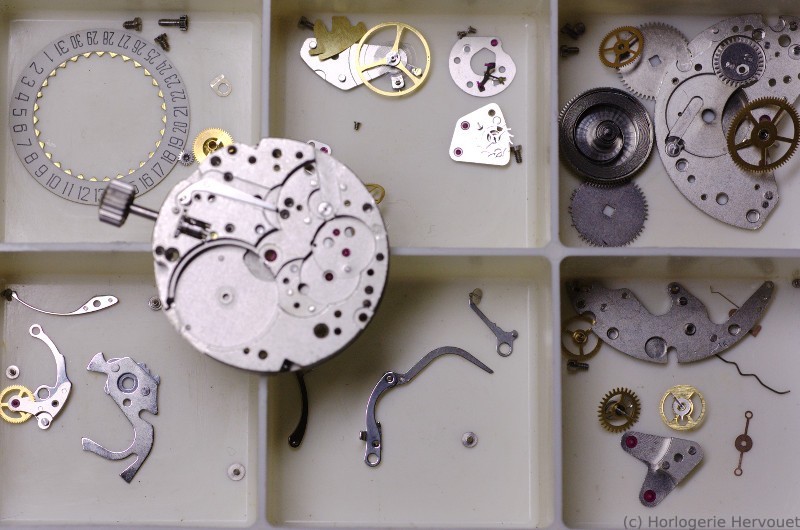
The ratchet wheel somehow lost 12 teeth, of course some of them found their way into the gear train and blocked the watch. A very uncommon mishap! The steel used to make the wheel may have been too hardened? Anyway, this is impossible to repair, so I had to find a replacement.

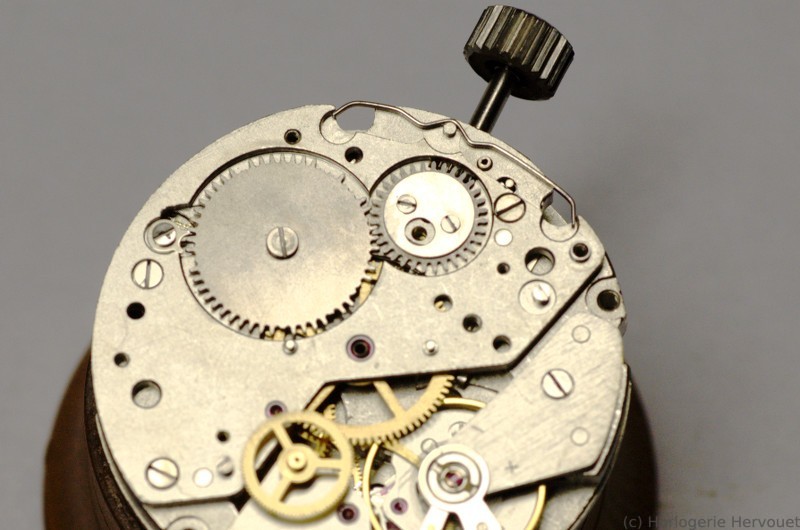
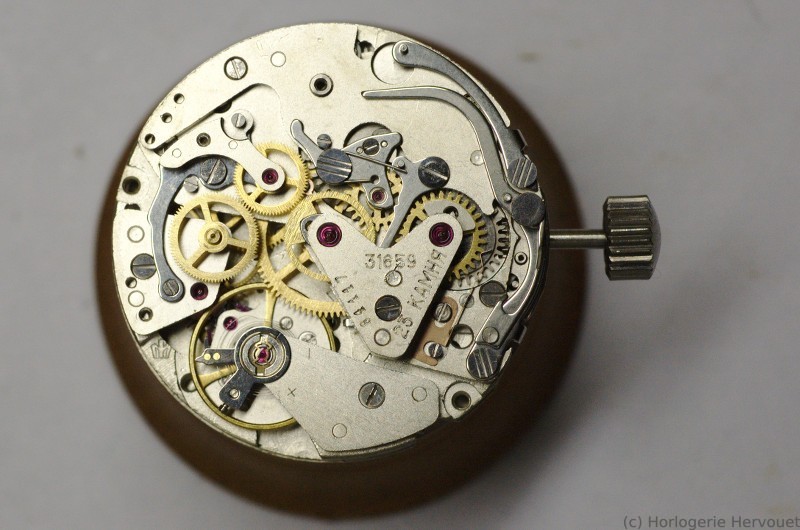
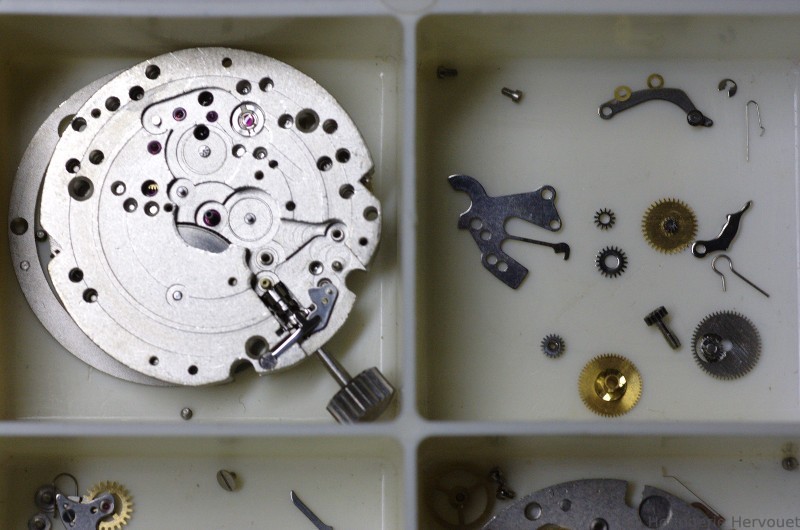
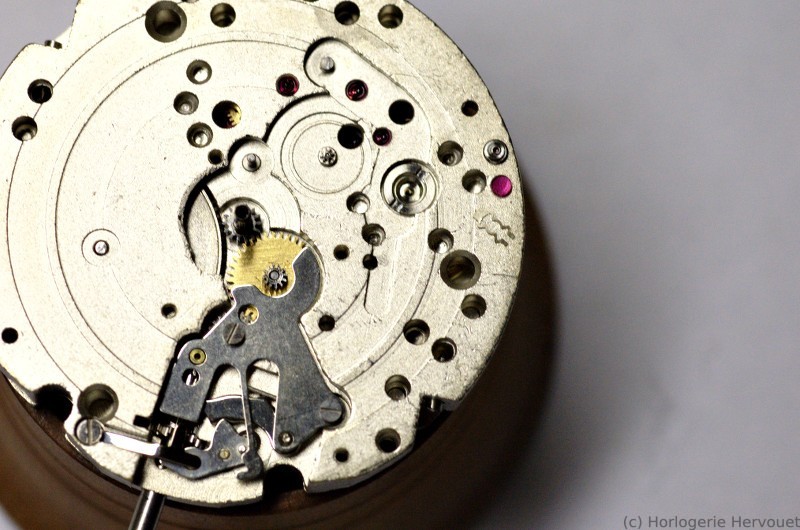
Let’s look at the insides of this chronograph; in particular, this a hacking version of the regular 3133, meaning that a lever stops the balance when the crown is pulled to adjust the hands:

What makes the 31659 a hacking 3133

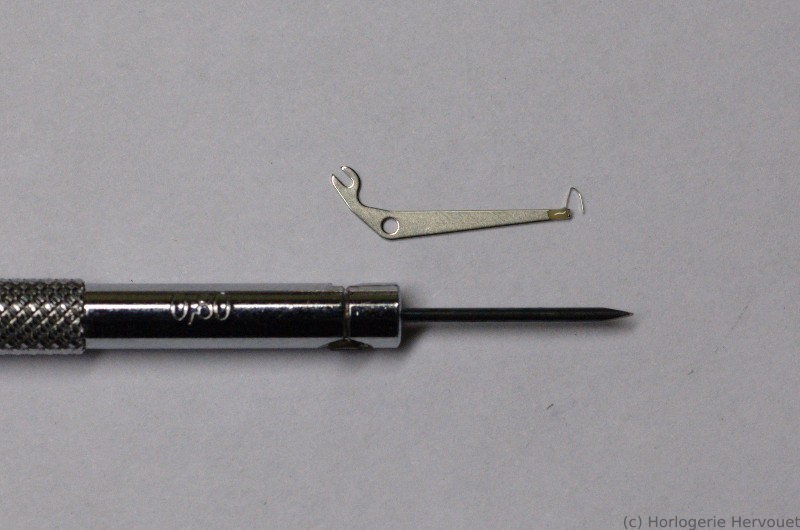
Alongside a 0.6mm screwdriver for size:

A closer view of the hacking lever

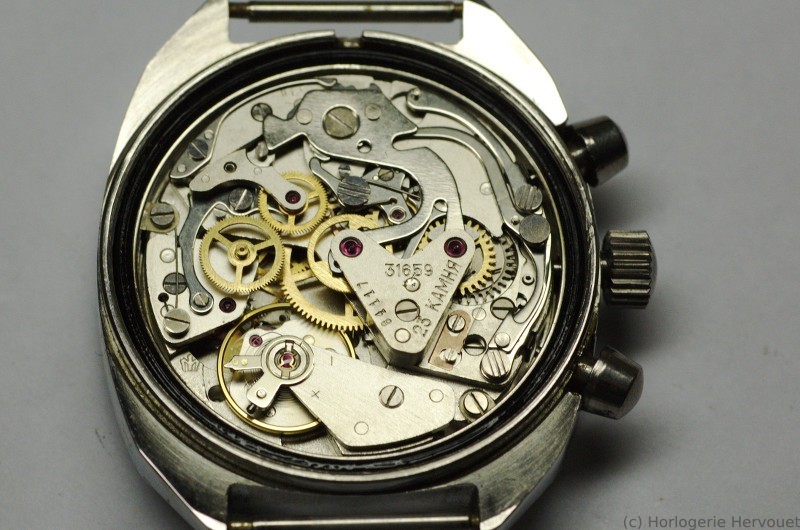
Gear train and chronograph parts

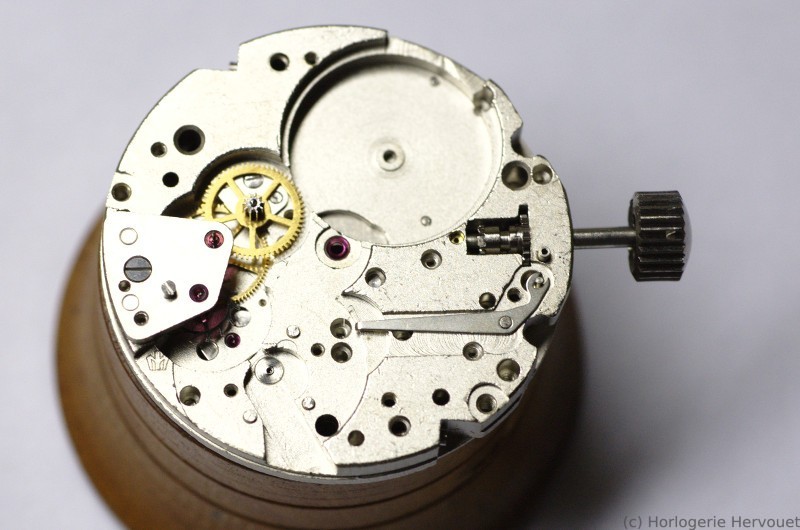
The bare movement in a chronograph can be quite simple, this is the case : a 21600 bph watch, big diameter, small seconds. All good for simplicity and accuracy.

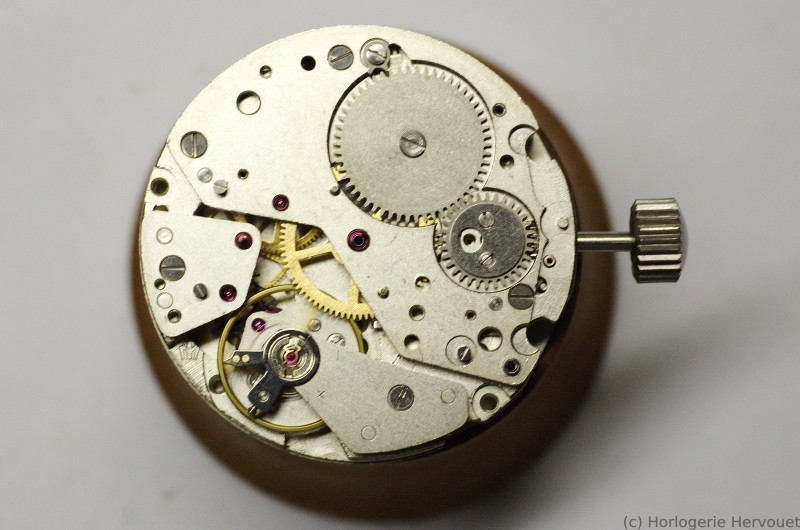
The bare movement

We can see from left to right : driving wheel and coupling clutch, chronograph bridge with seconds and minute counter, sliding gear and the command levers (start/stop and reset). Lots of screws, do not mistake a simple screw for an eccentric.

All chronograph parts minus the cam and reset hammer

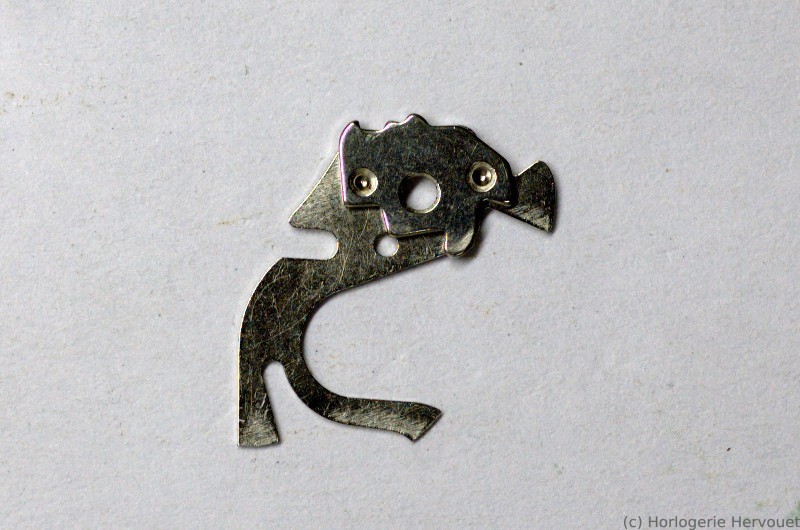
Each function (seconds counting, minutes counting, resetting, coupling the chrono with the watch…) is triggered by the cam, which is itself rotated by the command levers (i.e. the pushers). The cam is just behind the reset hammers:

The heart of a cam-operated chronograph

More parts on the dial side!

The Soviets did not use a Western shockproof device, but designed their own. This one looks like an Incabloc from a distance, but the “lyre” has no hinges, it must be carefully (!!!) removed to access the jewels:

Soviet shockproof device, Incabloc-like but more difficult to handle

All is put back together, this one is now good to go:

Back together, and running

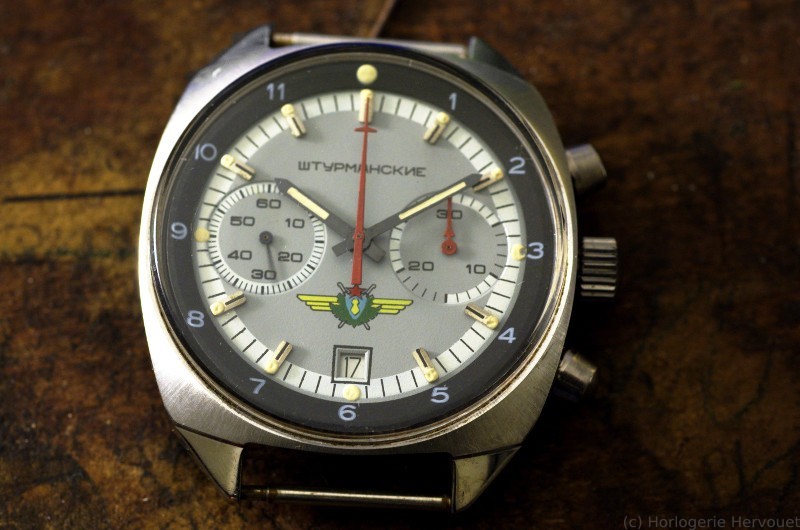
A late soviet-made 31659 ‘Sturmanskie’ military chronograph

Note: This chronograph does look like a Valjoux 7734, but it is different: small balance and higher bph, different jewel count, and I did not try to mix parts but I bet that most are not interchangeable. The Soviet obviously based their design on the 7734 but this is not a carbon copy!

Share

Longines 19.4

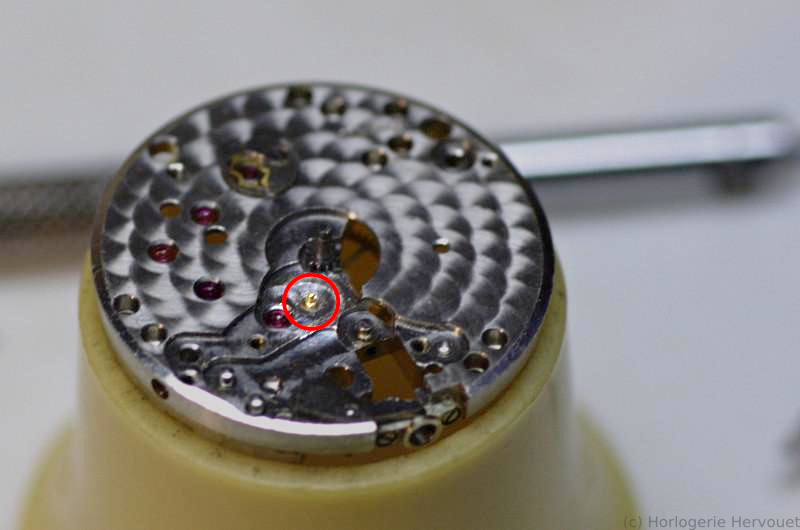
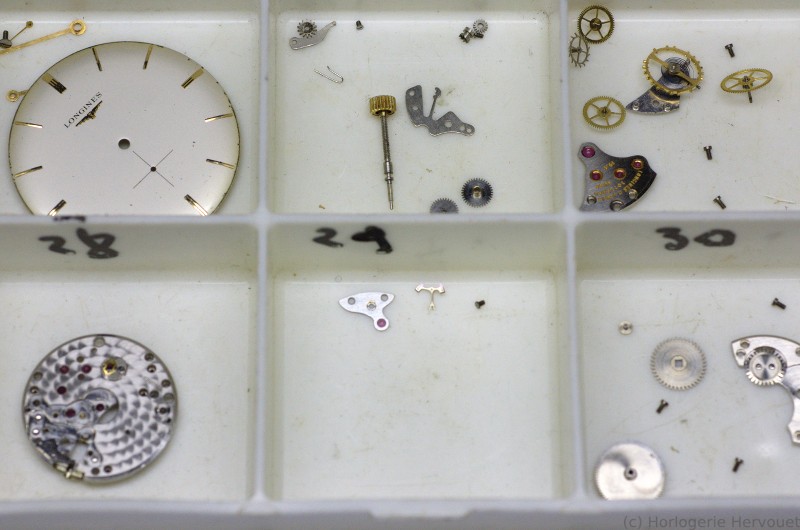
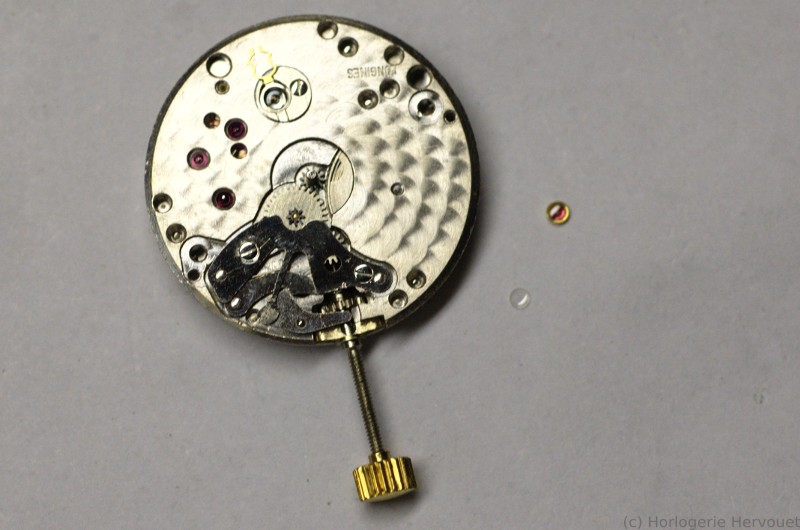
On this gold Longines, a strange problem occurred: the pivot of the minute wheel just … broke. Here is it pictured, after is was replaced and set in the main plate :

The problem

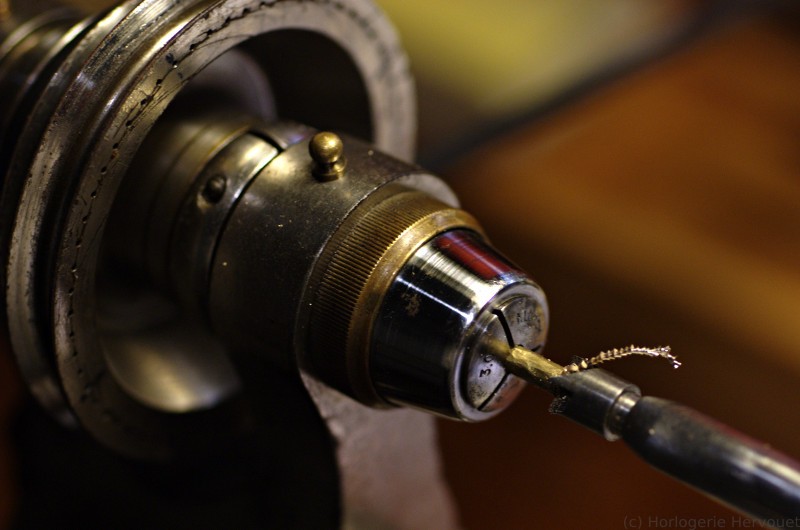
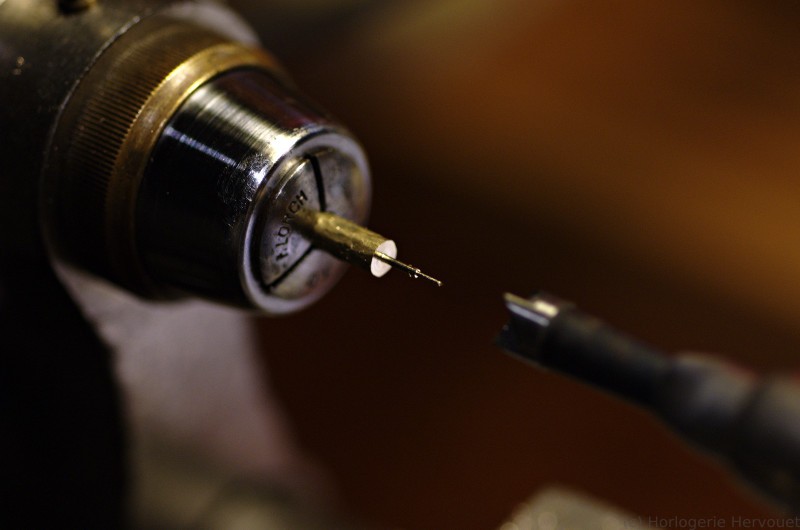
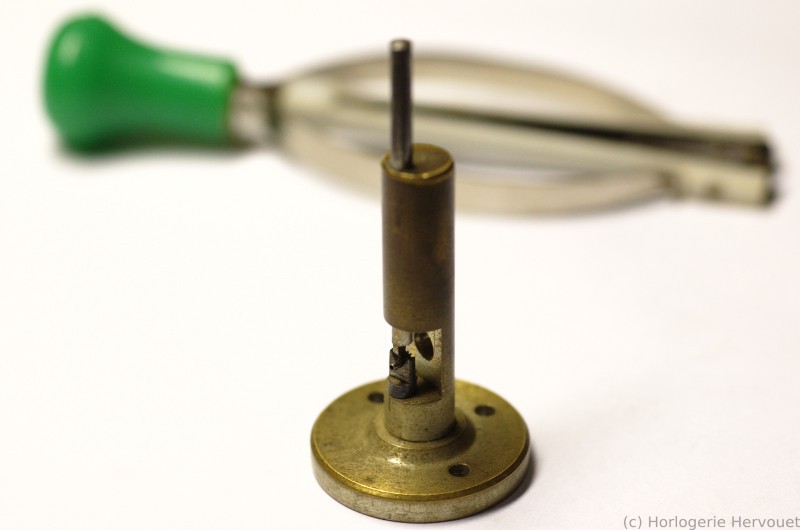
The 8mm Lorch lathe was quite useful: it has a range of pivot drills, allowing to quickly turn small diameters. 0.52mm (baseplate) and 0.35mm (minute wheel) were needed.

The Lorch at work

The solution

It was then finished by hand using a pivot file and a burnisher to the exact diameter and length. Lastly, it was precisely set in the baseplate so that the minute wheel do not touch it (but also do not touch the hour wheel): the tolerance is not bigger than 0.01mm. One would have thought the worst was over, but the hairspring needed some work too. A previous “watchmaker” trying to repair this watch damaged it with ham-fisted hands.

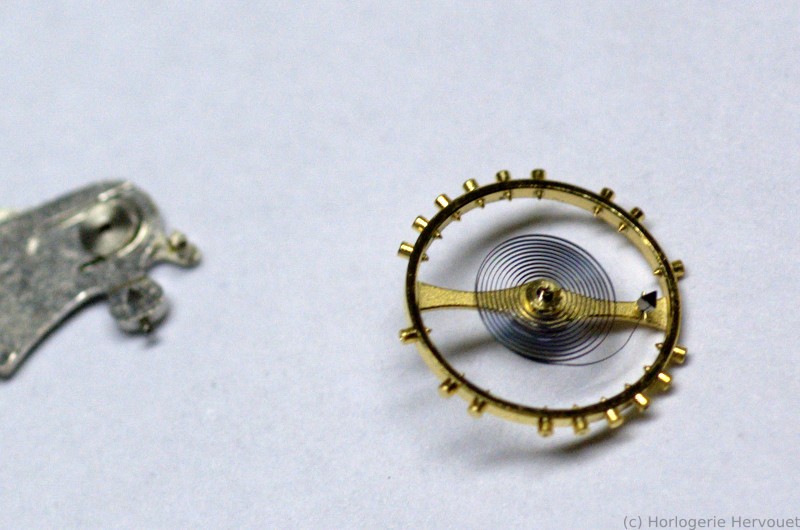
This hairspring was bent…

It was bent: not flat anymore, it touched the arms of the balance wheel. Also, the terminal curve was completely off, obviously. With a light touch and #5 Dumont tweezer, all is good again and from there, it is business as usual.

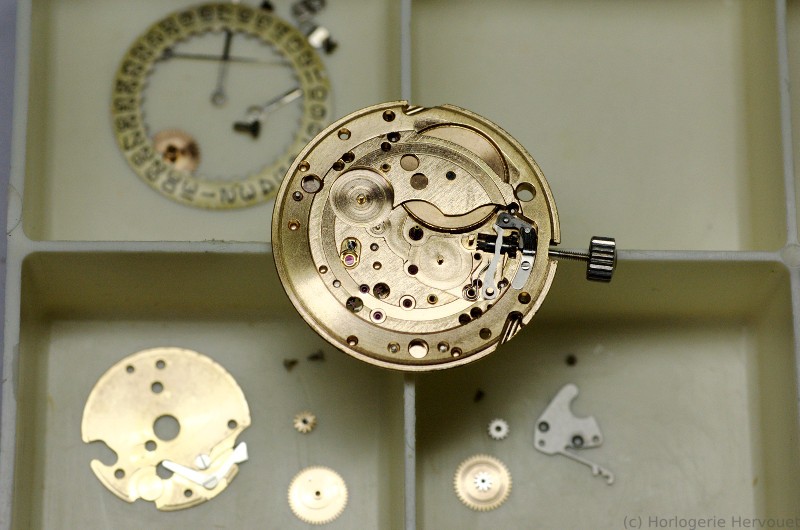
Longines 19.4, disassembed

But the folks at the Longines plant made a last nasty surprise: the cap jewels for the Incabloc shockproof system are white. Easy to lose!

Cap jewel, white

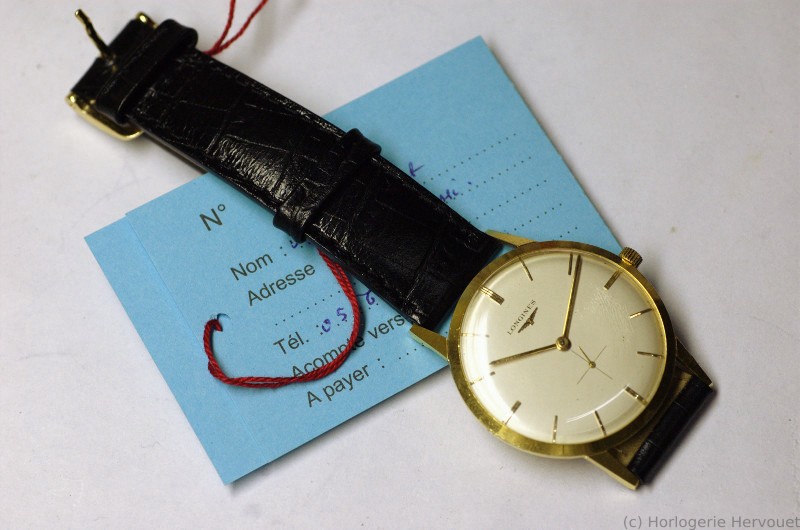
It feels nice to see this one ticking, and even nicer to see it leave the workshop… reminds me too vividly of a tricky repair.

Longines 19.4, now working

Share